Exteriors
Vinyl Siding Repair or Replacement: A Practical Way to Decide
Compare a damaged panel with wider wall-system problems, and understand how matching, moisture, and trim affect the right repair scope.
In this guide
One cracked vinyl siding panel and a wall with recurring moisture damage should not receive the same recommendation. A localized panel repair may be practical, while wider problems can require opening and evaluating more of the wall.
For New Jersey homeowners, the decision rests on three questions: what failed, whether a compatible repair is available, and what is happening behind the visible siding.
Start with the damage pattern
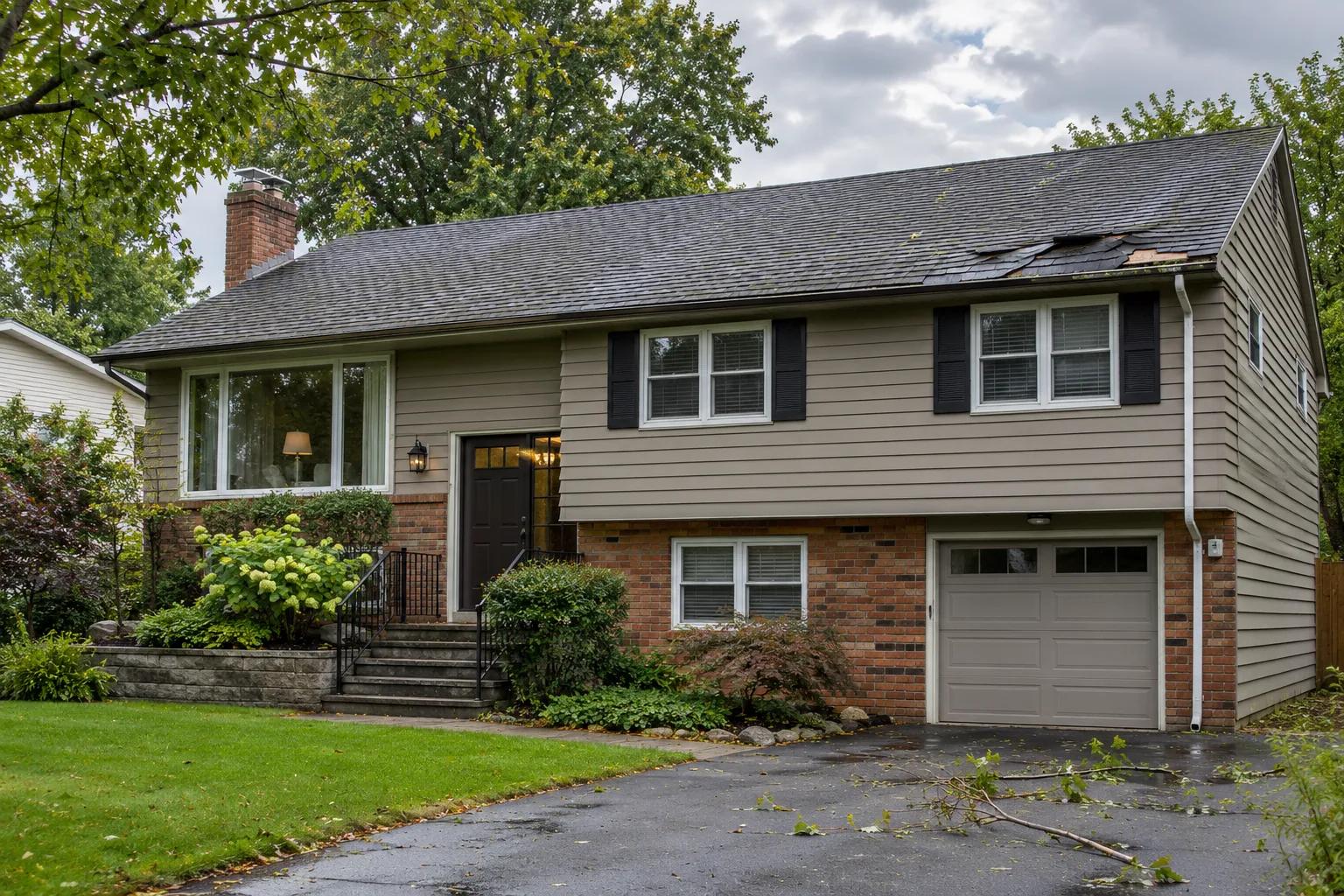
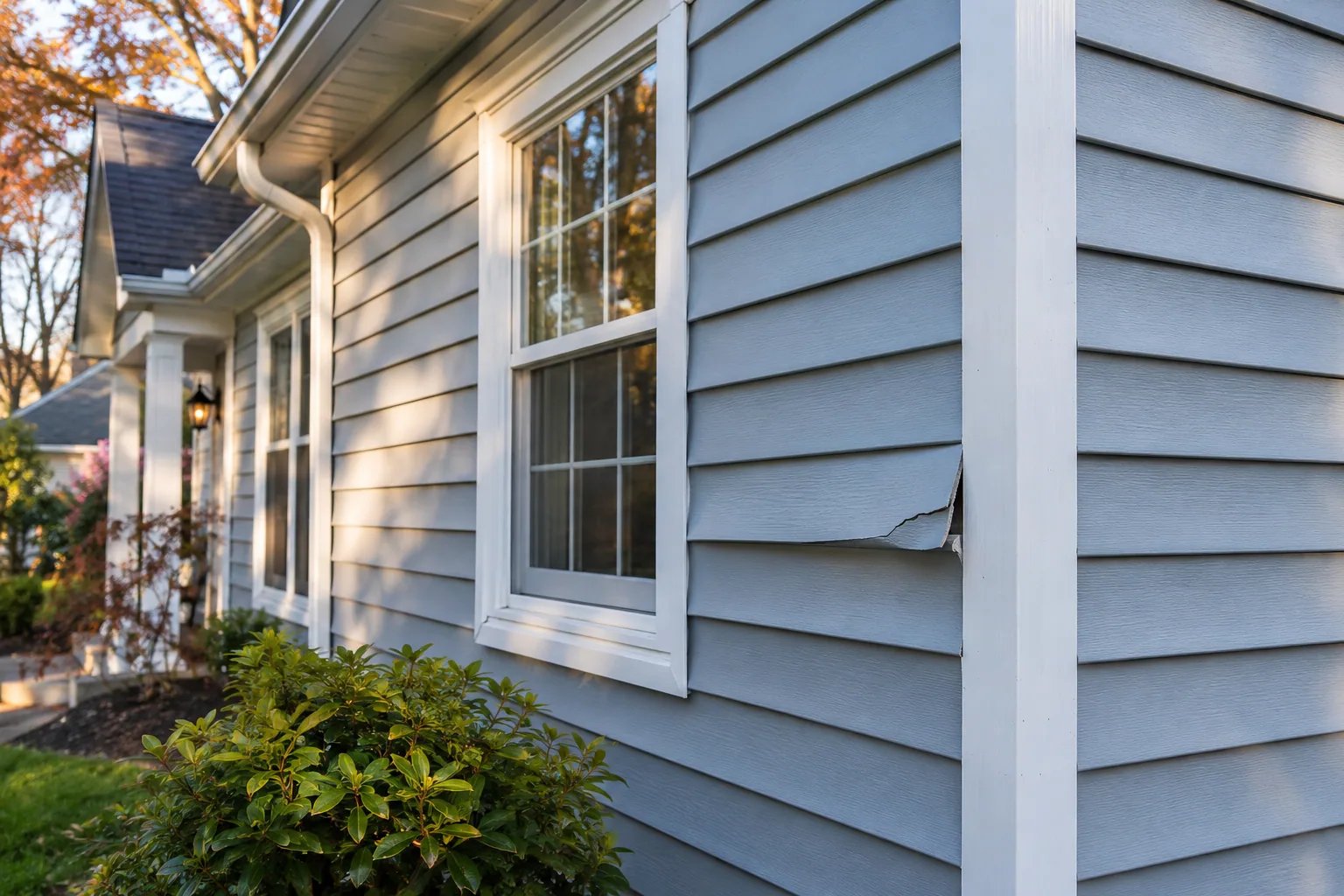
Photograph the whole affected wall before taking close-ups. Note whether the problem is one impact hole, a loose panel, several buckled courses, storm displacement, or damage around an opening.
Record when you noticed it and whether nearby rooms have stains or moisture. Include windows, doors, roof intersections, gutters, and downspouts in your photographs when they are close to the affected area.
Do not pull panels apart to investigate. Loose siding may conceal sharp edges, electrical components, or damaged material. Inspection access should be planned by the person doing the work.
Ask whether a panel repair is feasible
A localized repair depends on finding a compatible profile and being able to integrate it properly with the existing wall. Color alone does not establish compatibility.
Weathering can also make a new panel look different even when the original product is still available. Ask what the repaired area is likely to look like and whether the mismatch will be visible from normal viewing positions.
The Polymeric Exterior Products Association's installation guidance includes replacement of a damaged panel as a recognized repair technique. That possibility does not mean every damaged wall is suitable for a small repair.
Separate the cladding from the water-management system
Vinyl siding is the visible exterior layer. Flashing, the water-resistive barrier, sheathing, and adjacent connections also matter. A new panel should not be used to cover an unresolved moisture condition.
Ask whether there is evidence of deterioration behind the affected area and how it will be evaluated. If inspection requires opening the wall, clarify the initial opening scope and how any additional repair will be approved.
The Vinyl Siding Institute installation manual discusses wall preparation, flashing, and water-resistive barriers. Those underlying details are part of the reason two siding estimates may differ.
Look at the adjoining runoff path
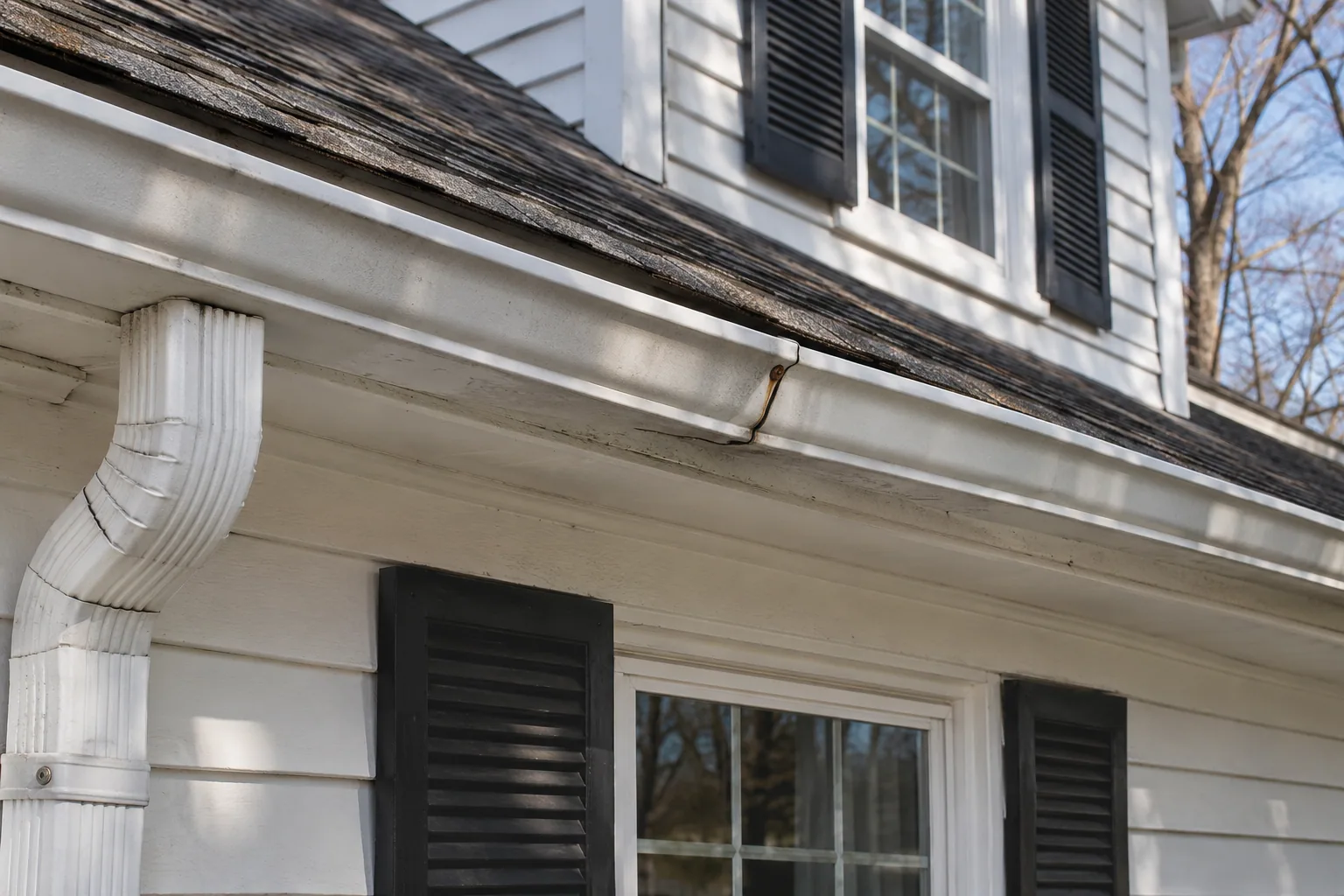
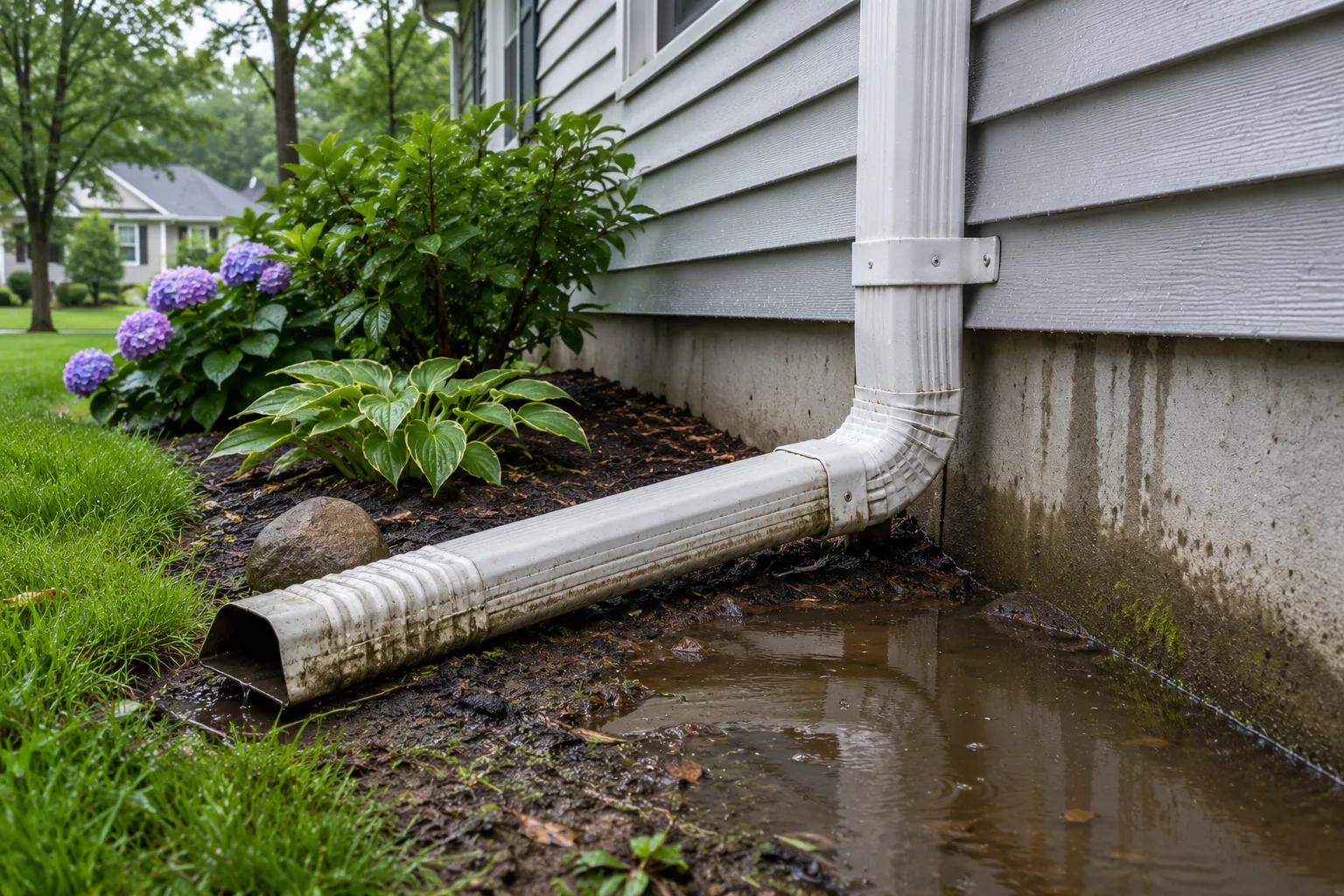
A damaged gutter, leaking downspout connection, or concentrated roof runoff may coincide with siding deterioration. That relationship needs inspection rather than assumption.
Use our gutter assessment guide and downspout drainage guide to record the water pattern. Coordinating related exterior work can prevent a repaired wall from facing the same unresolved condition.
Compare repair and replacement scopes
A repair proposal should identify the panels, trim, fasteners, and underlying work included. A replacement proposal should name the elevations covered, the material system, removal, wall preparation, and work around openings.
For either option, ask about product availability, matching expectations, concealed damage, property protection, and cleanup. Confirm which elements remain and why they are suitable to retain.
Wider replacement may be worth discussing when damage is distributed, compatible material is unavailable, or the wall system needs coordinated repairs. The recommendation should explain those conditions instead of relying on a general statement that “new siding is better.”
Questions homeowners ask
Does one hole require replacing the entire house's siding?
Not automatically. Material compatibility, access, surrounding condition, and appearance expectations guide the decision.
Can buckled siding simply be nailed tighter?
Do not assume that tightening is the correct fix. Vinyl siding needs appropriate installation and movement accommodation. The cause of buckling should be assessed.
What should I do after wind damage?
Document safely and request an evaluation. The storm inspection checklist includes useful observation habits for exterior damage.
Request an exterior repair assessment
Royal One Construction provides siding services in New Jersey. Use the estimate form to share wide views, damage details, and any indoor moisture symptoms so the initial scope can be planned clearly.