Roof repair
After a Storm: How to Prepare for a Roof Inspection in NJ
Document visible storm damage safely, recognize urgent warning signs, and organize the information a roofing professional needs.
In this guide
After a storm, the first task is to establish whether your home and its surroundings are safe. The next is to record visible conditions clearly enough that a roofing professional can plan an inspection.
You do not need to climb onto the roof to make a useful damage report. Ground-level photographs, interior observations, and a short timeline often provide a much better starting point than an attempted inspection in unsafe conditions.
Put safety ahead of documentation
Stay clear of downed wires, leaning trees, loose masonry, unstable ceilings, and damaged structures. Keep children and pets away from debris. A branch resting on the roof can create hazards beyond the visible shingles.
NOAA's guidance on caution after storms explains that risks continue after the weather passes. Follow local instructions and seek emergency help for immediate electrical or structural danger. Wait until conditions are safe before going outside to take photographs.
Do not attempt a roof walk, ladder inspection, or temporary rooftop repair yourself. A roof that appears intact from the ground may still be slippery or damaged.
Make a timeline while details are fresh
Record the date, approximate time, and type of weather you observed. Note when any leak began and whether it continued after rain stopped. Separate what you saw from what you suspect.
For example, “Water appeared at the upstairs bedroom ceiling during wind-driven rain” is an observation. “The storm ruined the entire roof” is a conclusion that still needs evidence.
Add any useful history: previous leaks, recent roofing work, an existing damaged gutter, or an older ceiling stain. This context helps a contractor distinguish new conditions from an unresolved earlier problem.
Photograph the property in a consistent order
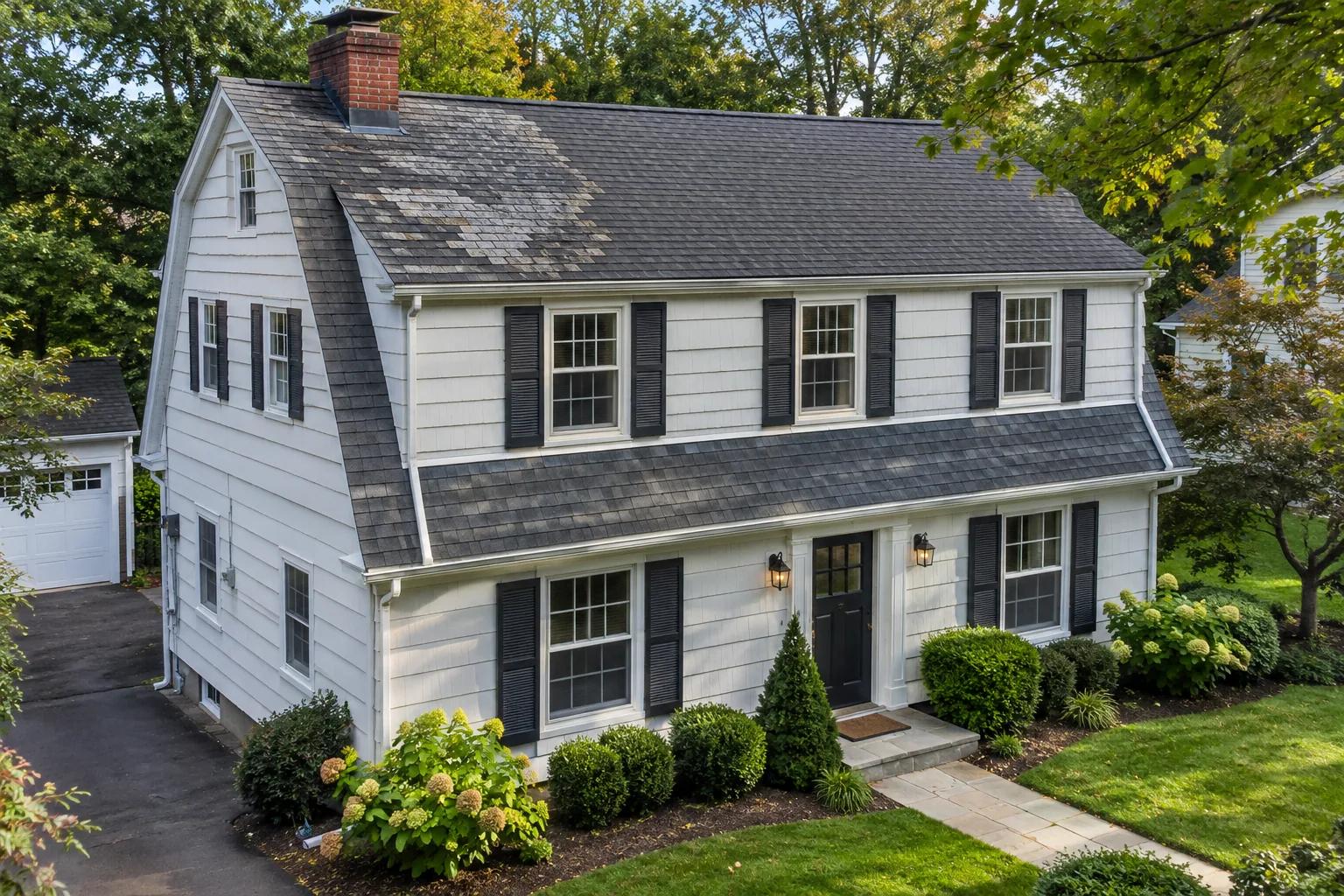
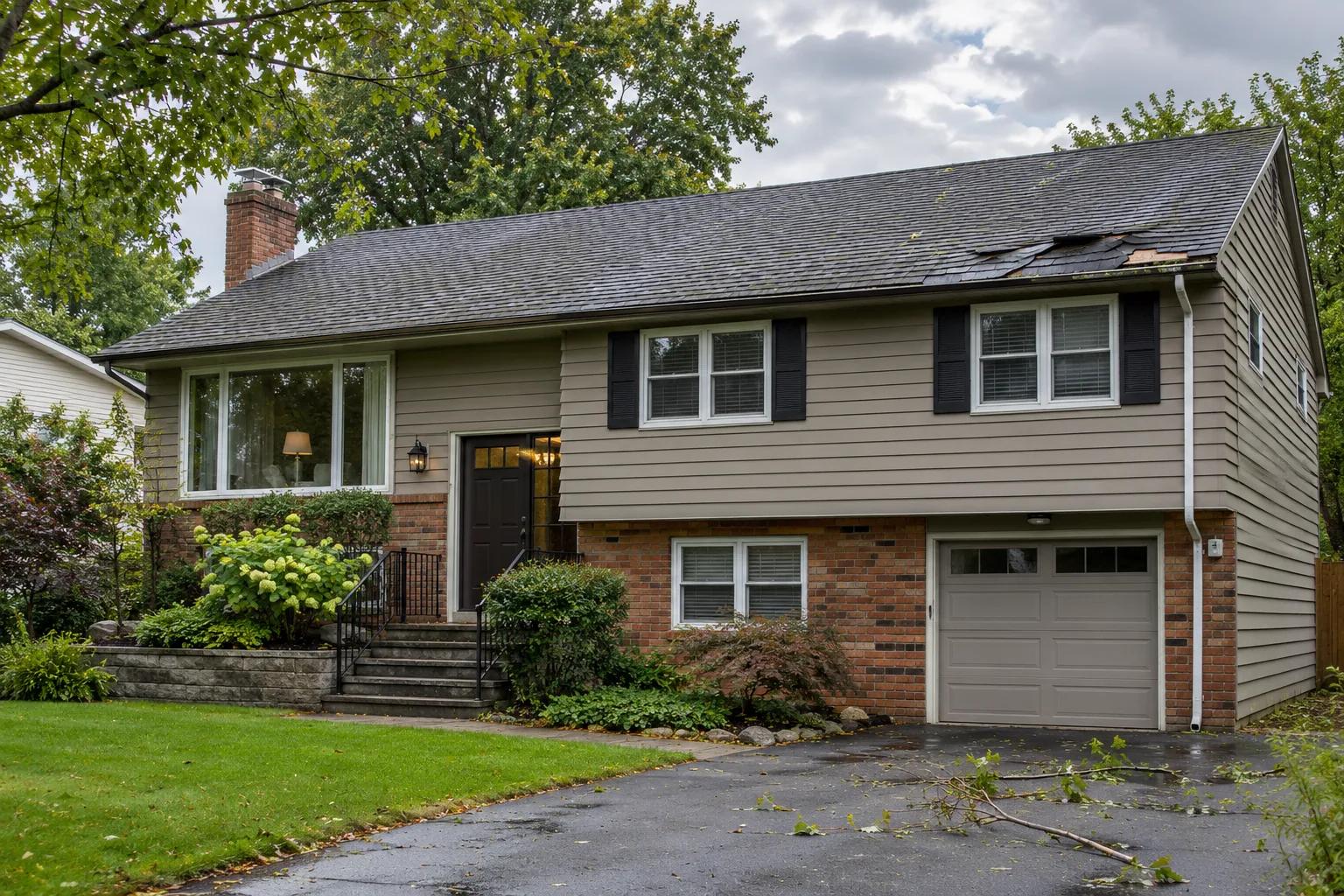
When safe, begin with a wide view of each accessible side of the house. Then capture closer views of visible damage without approaching hazards.
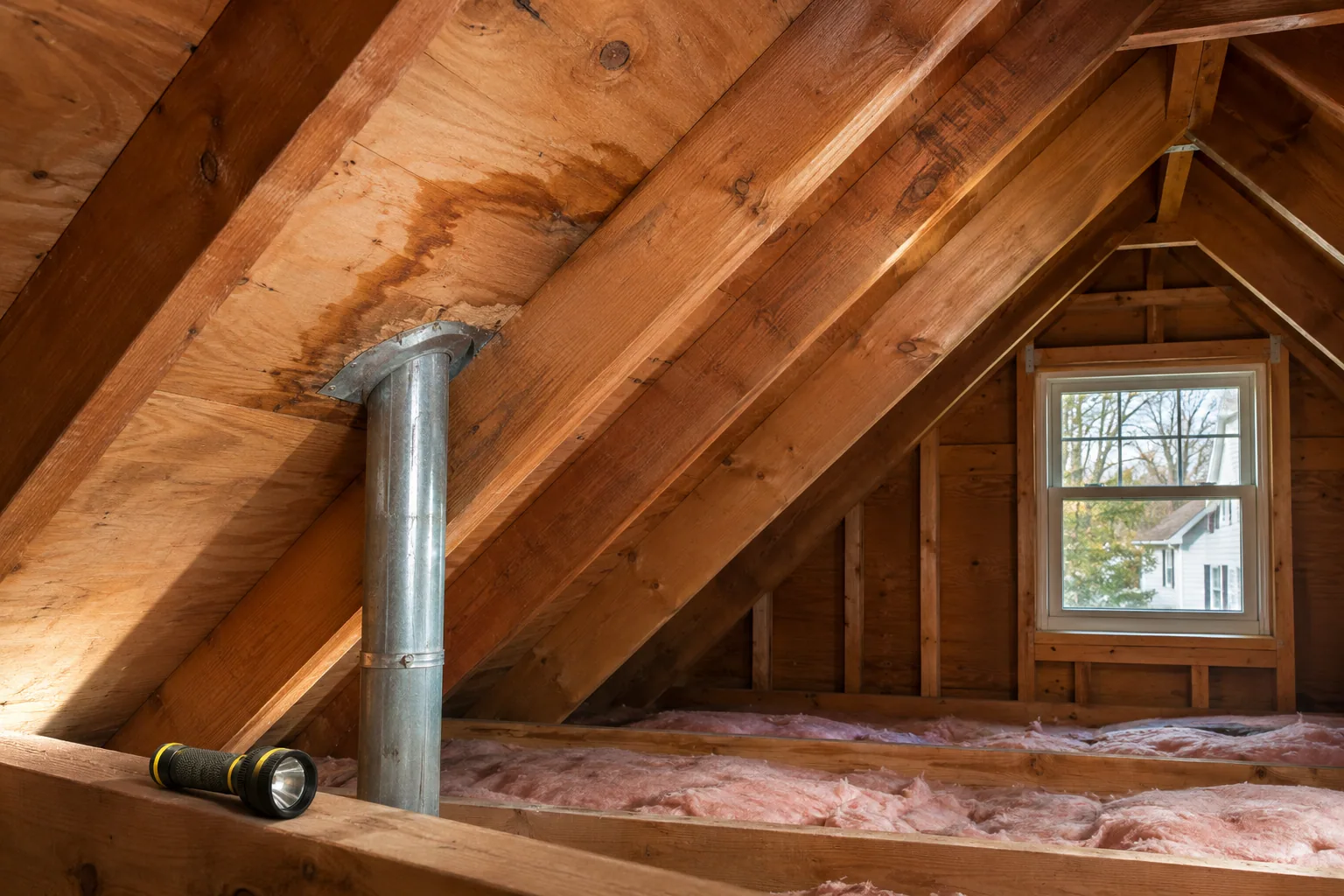
Useful images may include missing shingles, displaced roof-edge material, fallen branches, damaged gutters, loose siding, and debris found on the ground. Photograph both the object and where it was found. Indoors, record stains or drips with enough surrounding detail to identify the room.
Keep original files and add dates or notes in a separate record. Avoid assuming that scattered granules, one bent metal piece, or a distant dark mark establishes the cause or full extent of damage.
Ask what the inspection will cover
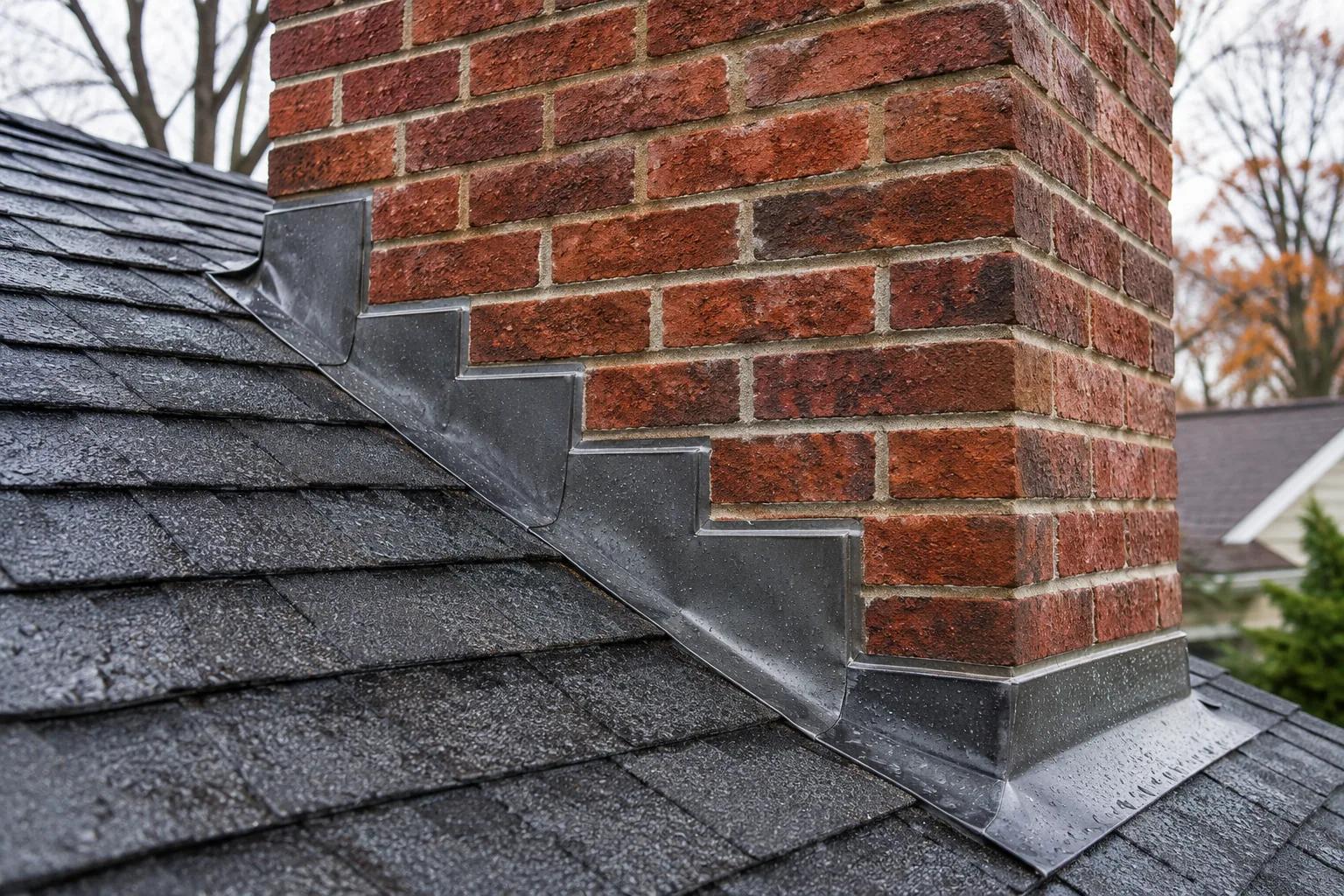
A useful inspection considers more than the most obvious damaged patch. Ask whether it includes roof edges, flashing, penetrations, drainage, and accessible interior evidence. If chimney-related staining appears, share it before the visit.
The findings should distinguish urgent protective work, targeted repair, and broader replacement recommendations. Ask for photographs and a written explanation of what was observed, what remains concealed, and what further access may be needed.
Our chimney flashing guide and roof-leak guide explain why water may appear away from its entry point.
Keep repair and insurance decisions distinct
A contractor can document conditions and propose repairs. Your insurer determines coverage under your policy. Do not interpret a repair estimate as an approval of a claim, a coverage promise, or proof that every condition resulted from the storm.
If you plan to contact your insurer, keep photos, inspection findings, and any authorized work records together. Ask the insurer which documentation it needs and how it wants urgent damage-limitation work handled.
Questions homeowners ask
Does visible storm damage mean the whole roof needs replacement?
Not necessarily. Extent, surrounding condition, and repair compatibility matter. See repair versus replacement.
Can I request an inspection before I know whether there is a leak?
Yes. Describe the visible condition and why it concerns you. Do not enter an unsafe attic to confirm water entry.
What should I send with an estimate request?
Send the address, service needed, date of the event, photos, and a description of active water entry or access hazards.
Arrange a professional next step
Royal One Construction provides storm-damage roofing information and roof repair in New Jersey. Use the estimate form to share a clearly labeled damage report and request an inspection.