Drainage
Downspout Drainage Problems: Follow the Water Past the Gutter
A gutter can work while the discharge still causes trouble. Learn how to document runoff, blocked outlets, erosion, and water near the foundation.
In this guide
A gutter can collect roof runoff correctly and still discharge it where it causes trouble. Water that pools beside a wall, washes soil away, or flows across an entry needs attention beyond the visible gutter.
Follow the water in stages: roof edge, gutter, downspout, outlet, and the ground beyond it. That simple sequence helps turn a vague “drainage problem” into a clear request for an evaluation.
Record where the problem starts
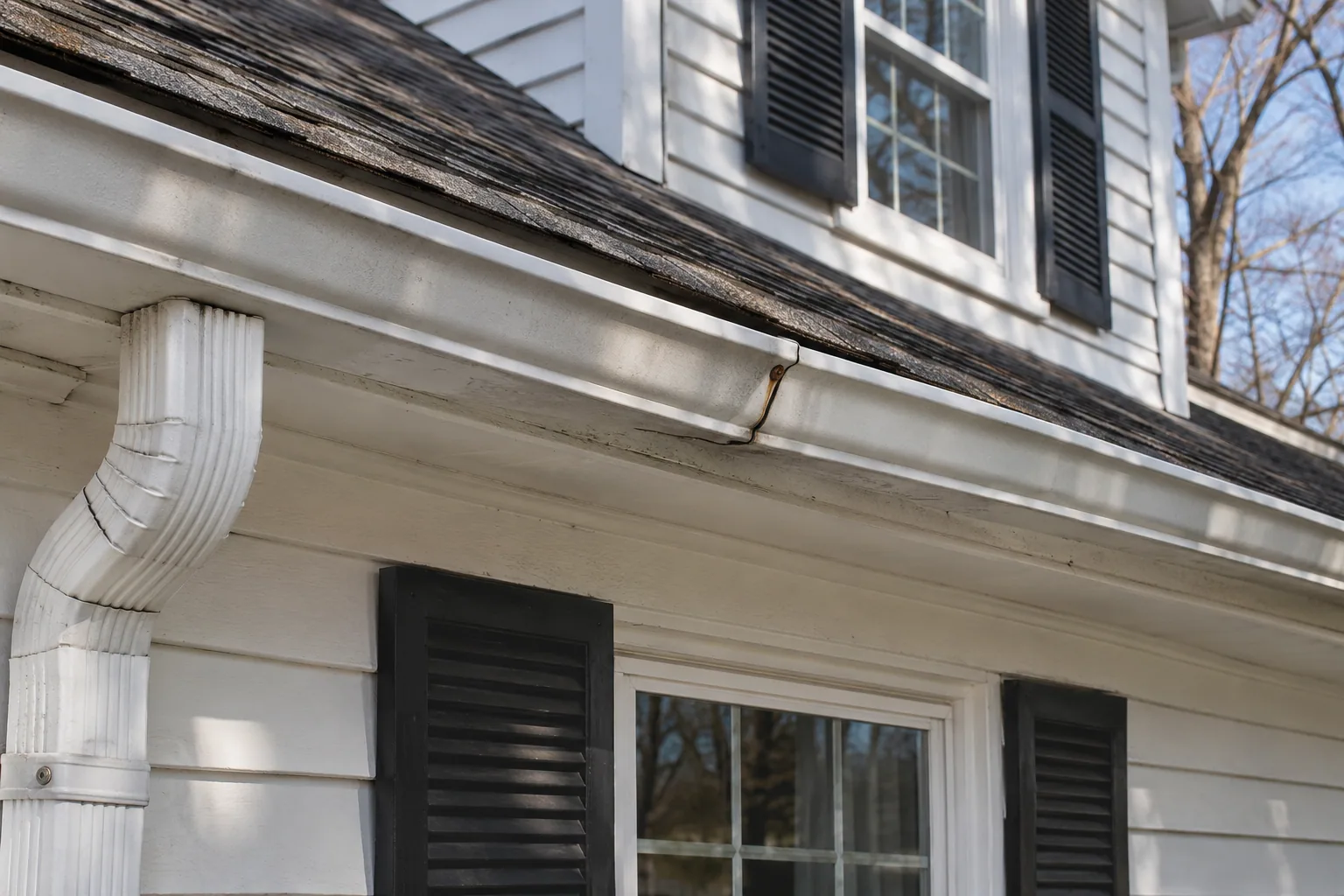
From a safe position during rain, note whether water reaches the downspout or spills before it gets there. A backed-up outlet can resemble a gutter-size problem. A disconnected downspout can send runoff against the wall even when the gutter itself is functioning.
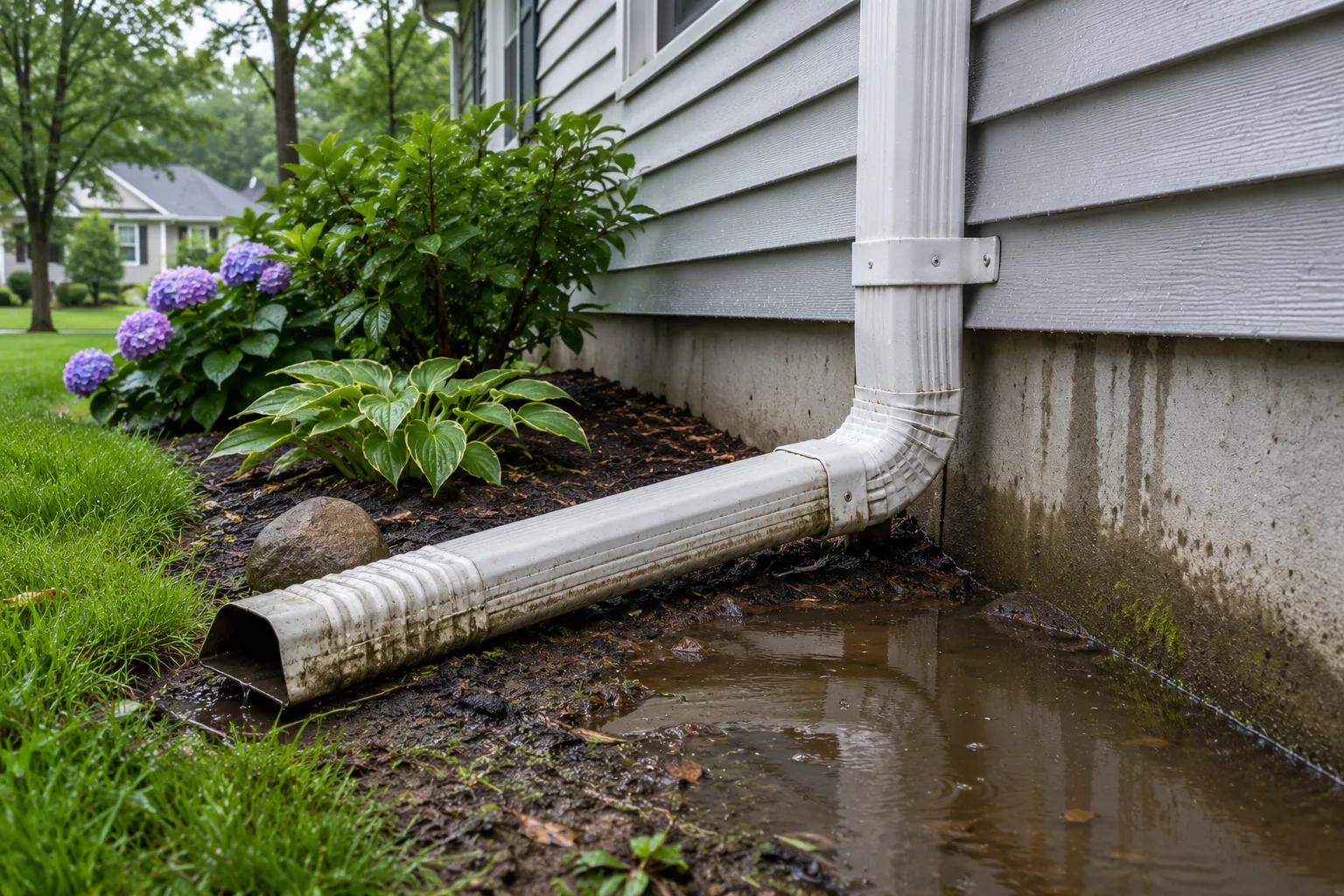
Photograph the connection at the gutter, the downspout run, and the discharge point. Include the nearby wall, walkway, or planting bed so the contractor can understand the context.
Stay off ladders in wet or windy conditions. Do not reach into a drain or underground pipe to investigate an obstruction.
Record where water goes next
Look for pooling, eroded soil, a washed-out mulch bed, staining, or runoff crossing steps and walking routes. Note whether the ground slopes toward the house and whether the same area stays wet after the rain.
Do not assume that extending a downspout by an arbitrary distance will solve every property. Site layout, neighboring property, buried services, local requirements, and available discharge options need consideration.
The Building America guide to gutters and downspouts explains why collection and discharge should be considered together. Its broader lesson is to move runoff away appropriately, with a solution suited to the building and site.
Treat underground drainage as a separate unknown
If a downspout connects to a buried pipe, the visible connection does not establish where the pipe leads or whether it is clear. Tell the contractor what is known and identify anything uncertain.
Useful questions include where the pipe discharges, whether it backs up, whether the route is documented, and who will inspect it if specialist equipment is needed. Do not connect a new outlet to an unknown pipe simply because the fitting matches.
A gutter proposal and a site-drainage proposal may cover different work. Ask which contractor is responsible for confirming the destination and performance of the discharge.
Look for related exterior damage
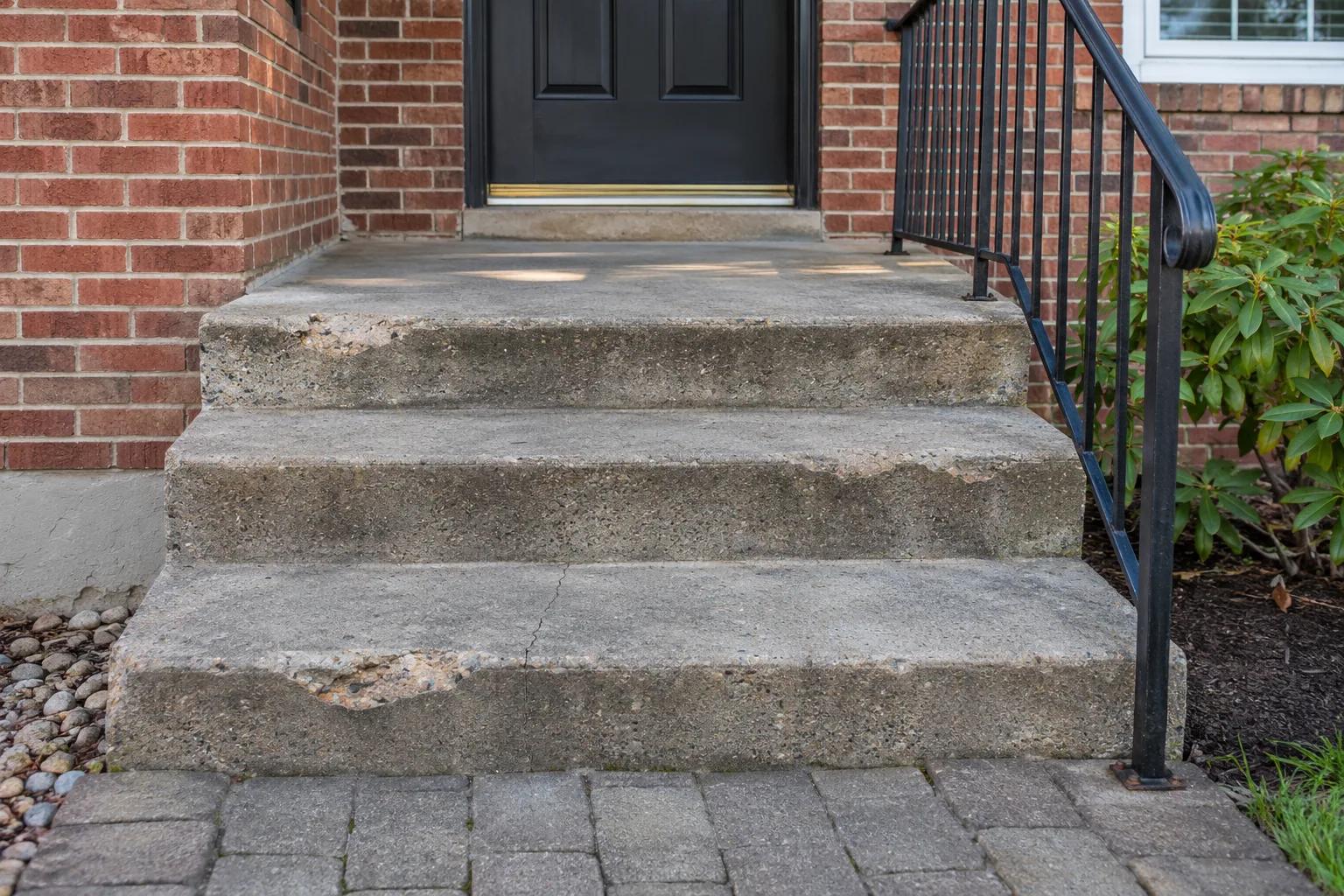
Repeated runoff can coincide with deterioration near masonry, siding, and entry steps. These symptoms do not prove a single cause, but they should be shown to the person assessing the work.
If concrete is chipped or an entry has moved, review our step repair guide. Repairing a surface without addressing a nearby water path may leave an important part of the problem unresolved.
Likewise, compare the findings with our gutter repair-versus-replacement checklist. The collection system and the discharge should support each other.
Ask for a defined scope
A useful recommendation identifies the observed failure, proposed route, included materials, and any site work or specialist evaluation excluded from the price.
Ask how buried conditions, access limitations, and additional repairs will be handled. Clarify who confirms any required local permissions or connection restrictions before work begins. Avoid assuming that a generic drawing applies to your lot.
Questions homeowners ask
Does water near the foundation prove the downspout is responsible?
No. Runoff is one possible contributor among others. The evaluation should connect observations to the proposed solution.
Can new gutters fix an underground blockage?
Not by themselves. The blocked or unknown drainage route needs its own assessment.
What changes in winter?
Runoff crossing walking areas can create additional concerns when it freezes. Note the pattern and use the winter maintenance checklist to plan a professional discussion.
Share a complete runoff record
Royal One Construction provides gutter services and exterior construction information in New Jersey. Use the estimate form to describe where the water starts, where it collects, and what you know about existing drainage.