Masonry
Concrete Step Repair or Replacement: When Is a Patch Enough?
Distinguish a chipped edge from movement, widespread deterioration, and drainage problems before choosing a step or stoop repair.
In this guide
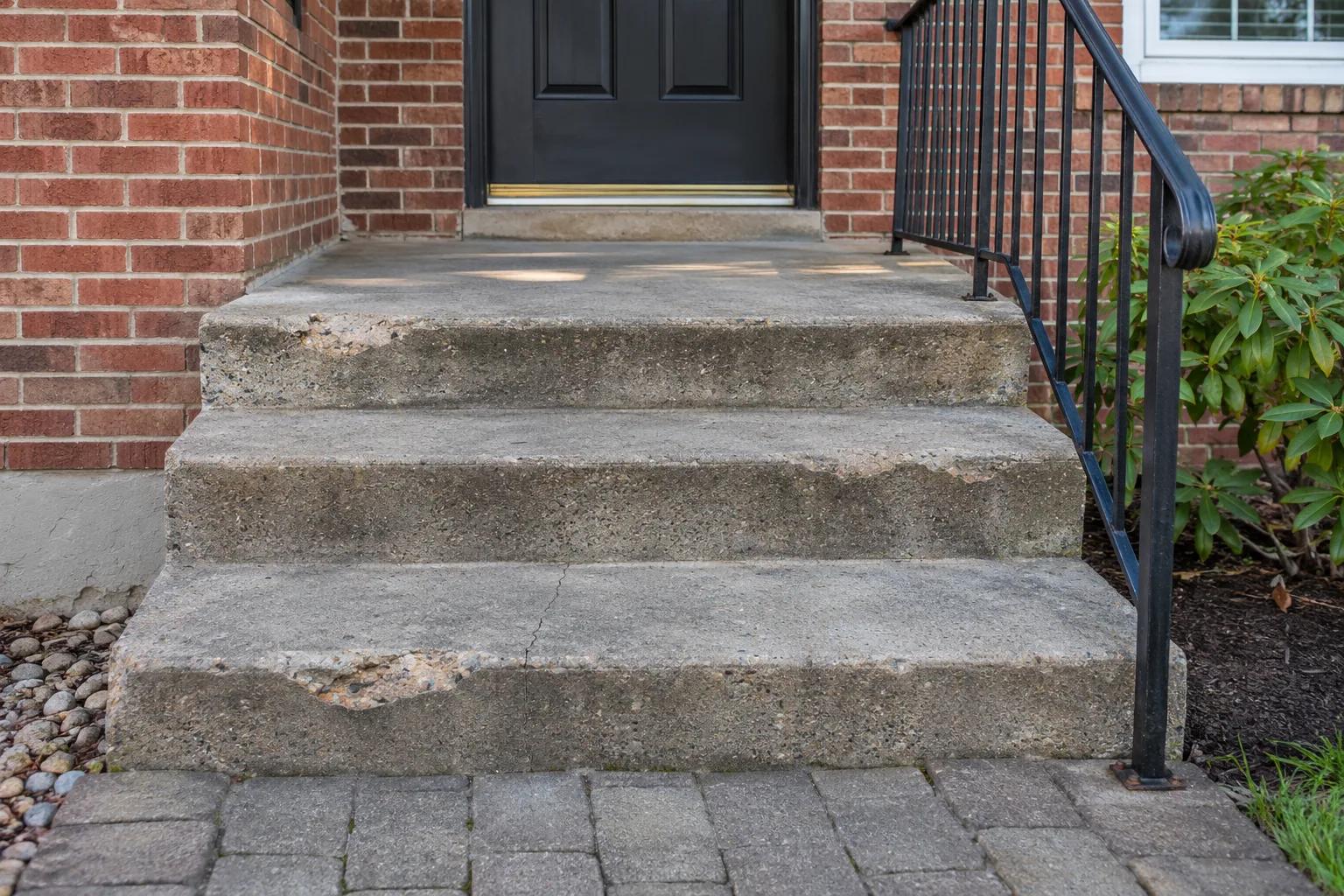
A chipped corner on a concrete step may be a localized repair. A stoop that has moved, a deeply deteriorated stair, or a loose railing connection calls for a different evaluation.
Before choosing a patch or replacement, establish whether the remaining concrete is sound and whether the underlying cause is still active. Appearance alone is not enough to define a durable repair.
Make the entry safe first
Loose pieces, unstable railings, movement, and uneven walking surfaces can create immediate access concerns. Keep people away from a visibly unsafe step and arrange another safe route where possible.
Do not repeatedly walk or bounce on a suspect step to test it. Avoid pulling at loose material or leaning on a damaged railing. Tell the contractor how the entry is used and whether it is the only practical access to the home.
Photograph the full stair and landing from a safe position. Include the connection to the house and the adjacent ground so the assessment has context.
Distinguish a surface defect from a broader problem
A small chipped edge is different from widespread scaling, deep cracking, exposed reinforcement, settlement, or separation. The extent and depth of deterioration matter as much as the visible area.
QUIKRETE's guidance on repairing concrete steps explains the importance of a sound, prepared surface and a repair material suited to the application. A patch needs more than a product that resembles the existing concrete.
Ask what material will remain after unsound concrete is removed. If the remaining section cannot support a suitable repair, the contractor should explain why a broader scope is recommended.
Look for movement and water
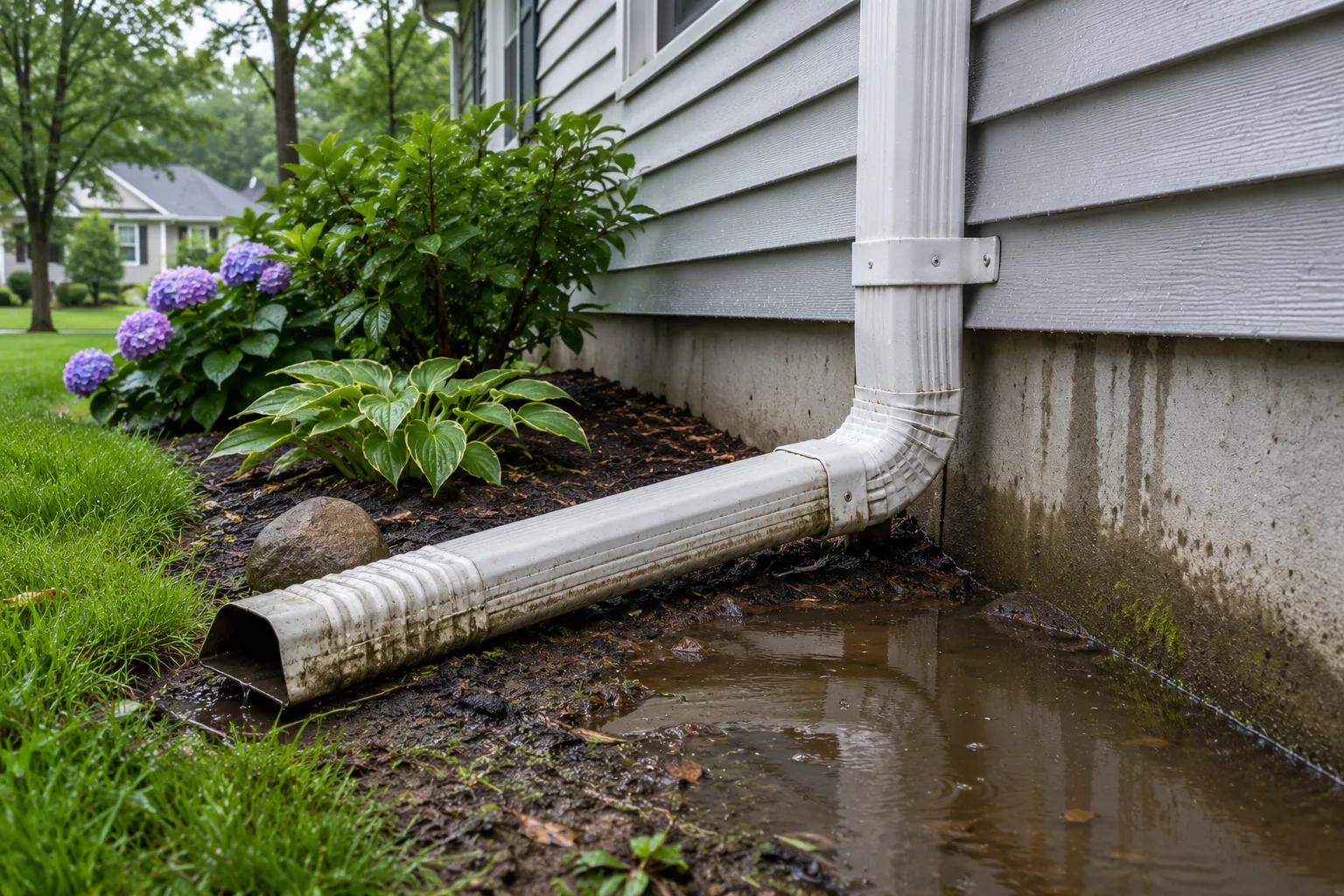
Note whether a crack has changed, whether the landing has pulled away from the house, and whether the step becomes wet from a nearby downspout or overflowing gutter. Old photographs can help establish whether the condition is progressing.
These observations do not diagnose the cause. They tell the contractor what to investigate before recommending a surface treatment.
Use our downspout drainage guide to document nearby runoff. A repaired surface may still face the same problem if the water path remains unresolved.
Ask what a repair includes
A useful repair proposal identifies the affected steps or landing areas, preparation, repair material, finish expectations, and any associated railing or drainage work.
Ask whether the new material is likely to differ in color or texture. A structurally appropriate repair can still remain visible, and that expectation should be discussed before work begins.
Clarify how access will be managed during the work and while the chosen material reaches its required condition for use. Do not assume that all patching products permit the same return-to-service timing.
Ask what replacement includes
A replacement estimate should explain demolition, the new step or stoop arrangement, supporting conditions, connections, railing work, disposal, and any adjacent masonry affected.
Confirm how project-specific dimensions, approvals, and inspection requirements will be established. This is particularly relevant if the work changes the entry layout rather than simply repairing a small surface area.
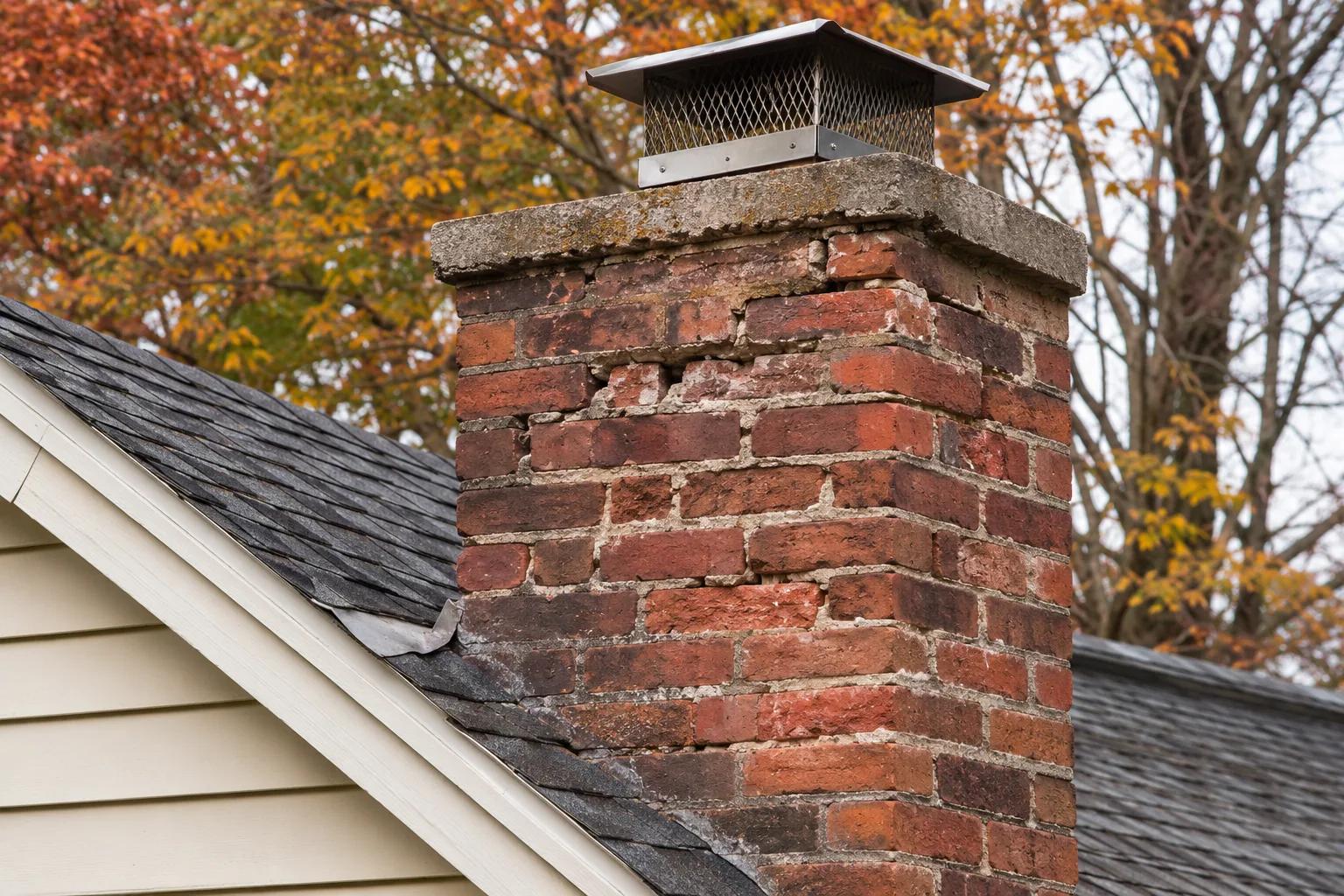
If brick or stone is involved, specify those materials separately. The chimney masonry guide illustrates why mortar-joint work and rebuilding should not be treated as interchangeable descriptions.
Questions homeowners ask
Can every concrete crack be filled?
No. A filler is not automatically appropriate for movement, deep deterioration, or an unstable stair. The cause and remaining material need evaluation.
Does a patch need to match perfectly?
Discuss appearance and performance separately. Matching can be difficult, and the proposal should state realistic finish expectations.
Should a connected deck or landing be checked too?
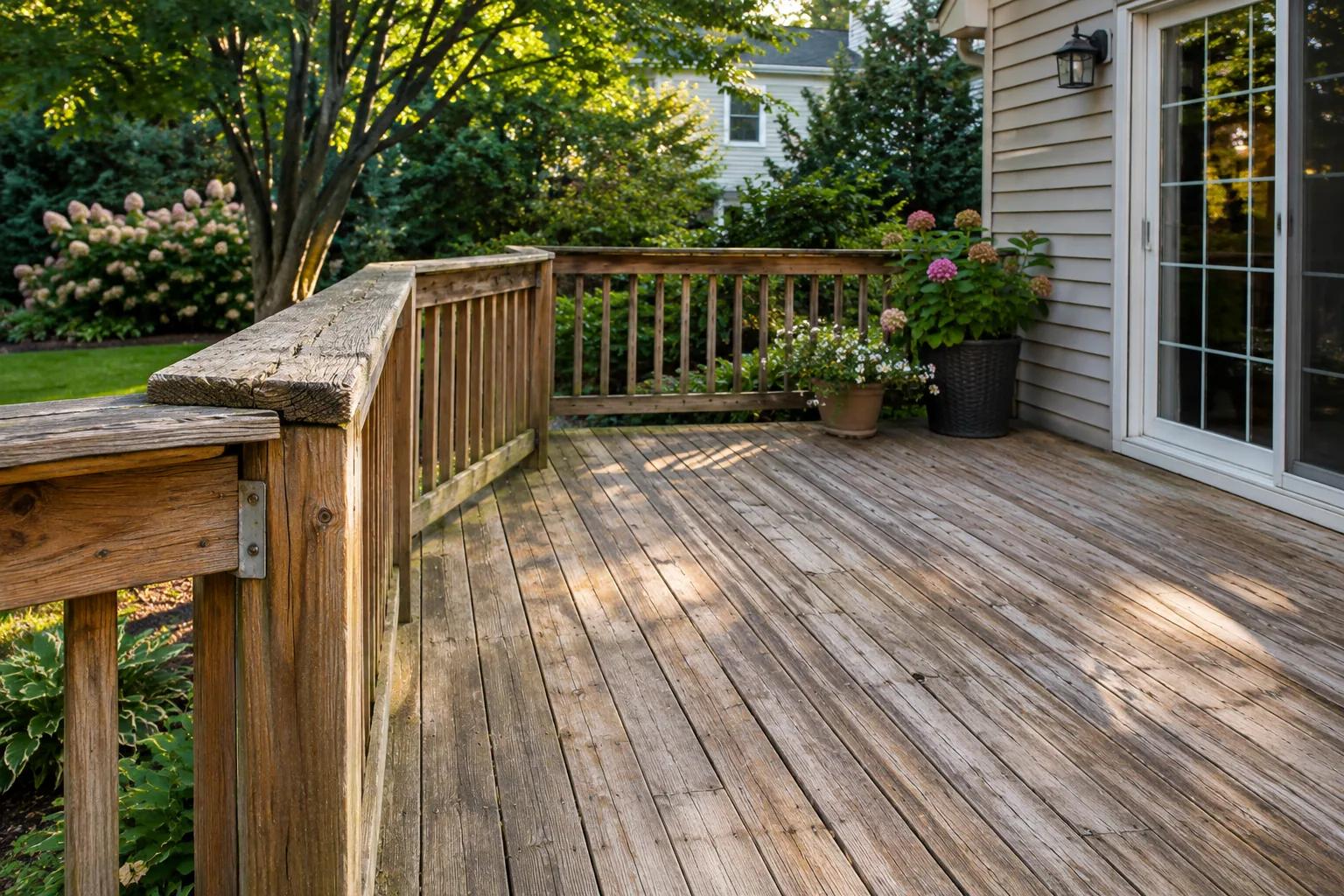
Yes, include connected components in the discussion. See our deck repair guide for related inspection questions.
Request a step or stoop evaluation
Royal One Construction provides step and stoop construction and masonry services in New Jersey. Use the estimate form to describe the damage, access needs, and nearby drainage so the proposed scope addresses more than the visible chip.