Chimney
Chimney Repointing or Rebuilding? How to Compare the Scope
Learn what repointing can address, which conditions need a broader evaluation, and how to compare chimney masonry proposals.
In this guide
Repointing renews deteriorated mortar joints. Rebuilding replaces a portion of the chimney masonry. Those descriptions sound similar on a short estimate, but they address different conditions and can involve very different work.
Before choosing a scope, ask what is damaged, whether the remaining masonry is sound, and why the problem developed. A surface repair should not conceal movement or leave the moisture source untouched.
Separate mortar deterioration from damaged masonry
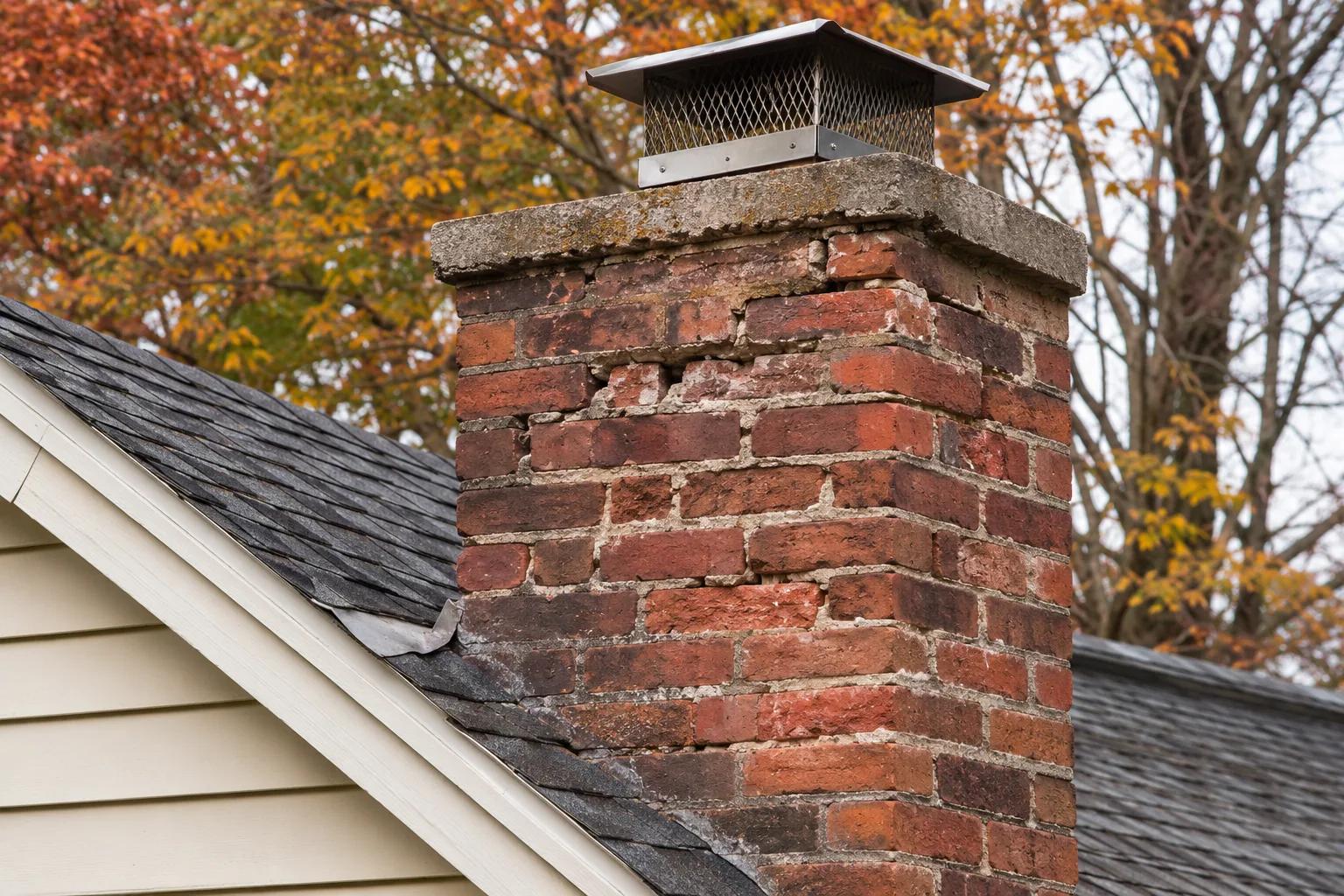
Mortar joints can weather while much of the surrounding brick remains serviceable. In that situation, a contractor may recommend removing deteriorated joint material and replacing it with a compatible mortar.
A broader evaluation is needed when there are loose units, significant cracking, displacement, leaning, extensive brick deterioration, or damage that extends deeper than the visible joints. Do not approach a chimney that may shed masonry. Keep people away from the affected area until it can be assessed safely.
Photographs from the ground can show overall shape and visible damage. They cannot establish the condition of every joint or the stability of the assembly.
Find the water source before choosing the finish
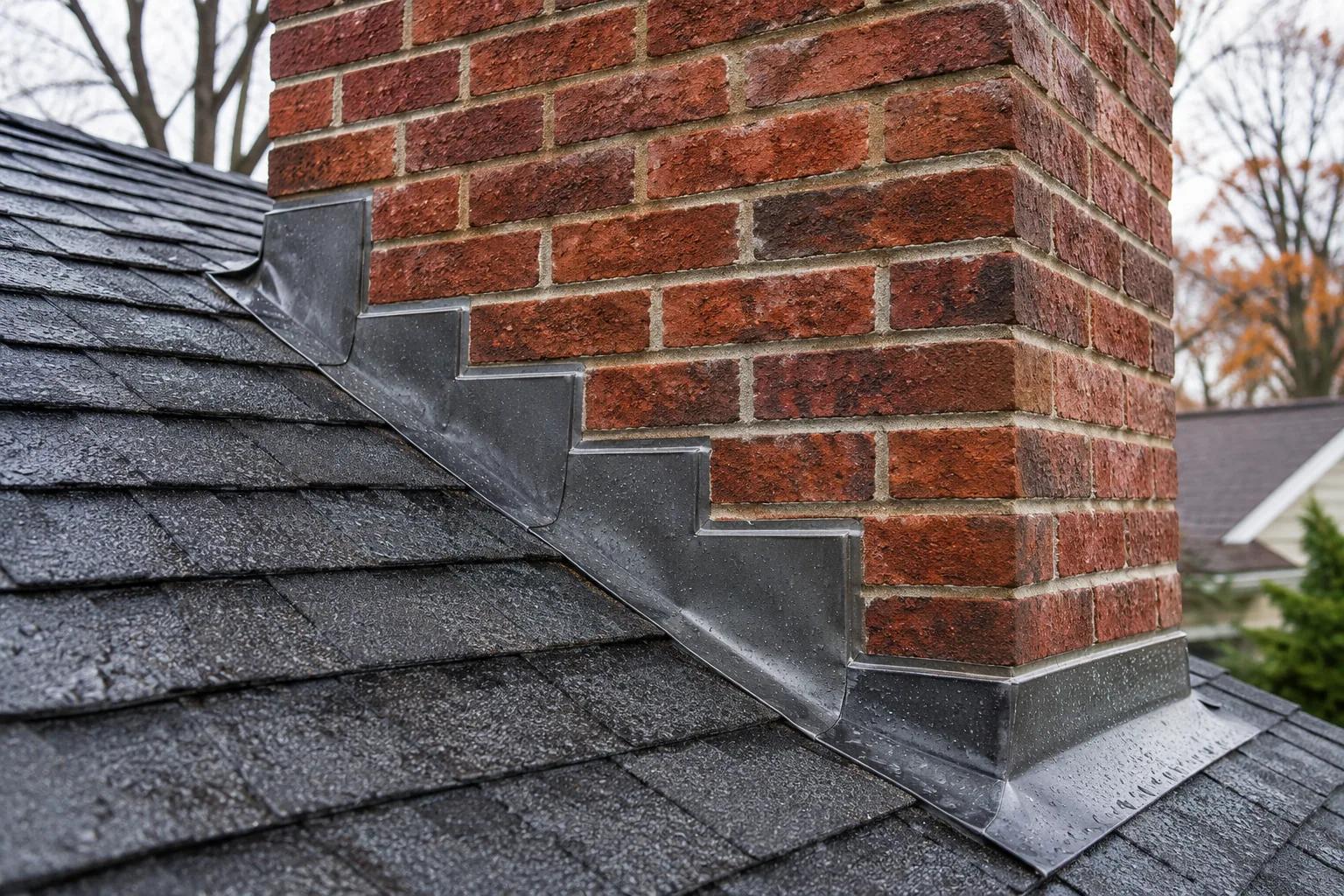
Recurring moisture can affect mortar and masonry. Ask whether the inspection includes the crown, flashing, roof junction, and other relevant conditions instead of treating every defect as a pointing problem.
The National Park Service's Preservation Brief 2 explains that repointing alone does not solve deterioration caused by an unresolved moisture or movement problem. It also emphasizes matching mortar to the existing masonry.
That preservation guidance is particularly useful background for older brick chimneys. It is not a substitute for an inspection of your specific house.
Ask what “repointing” includes
A clear proposal should identify the faces and sections included, the condition of the existing joints, and how the contractor will prepare and finish them.
Ask how the replacement mortar will be selected for compatibility with the existing brick and mortar. Stronger is not automatically better when materials must work together. Color and joint appearance matter, but physical compatibility matters too.
Clarify whether individual damaged bricks, the crown, cap, flashing, access equipment, and debris removal are part of the same work. A low total may simply cover fewer items.
Ask what “rebuilding” includes
A reconstruction proposal should state the portion to be removed and rebuilt, why that extent is needed, and which adjacent details will be restored or replaced.
Ask what will happen if the condition changes once masonry is removed. The approval process for added work should be explicit. Also distinguish exterior masonry work from flue, appliance, fireplace, or interior restoration work; one does not automatically include the others.
If there are concerns about fireplace or heating-appliance operation, seek an appropriately qualified inspection before use. A masonry appearance assessment does not establish that the connected system is safe to operate.
Compare the recommendations fairly
Use the same photographs and observations when requesting explanations. Ask each contractor to identify which material can remain, what must be removed, and how the proposal addresses the cause.
Our chimney flashing guide helps distinguish roof-junction work. The winter maintenance guide shows how to record seasonal changes without rooftop access.
Questions homeowners ask
Can new mortar fix a leaning chimney?
Repointing should not be assumed to correct movement or instability. Those conditions require a specific evaluation and an appropriate repair design.
Should the entire chimney be repointed if only one side looks worn?
The affected area and underlying cause should guide the scope. Ask why each included section needs work rather than assuming full coverage is necessary.
Does a new cap solve every chimney leak?
No. A cap addresses particular conditions; it does not automatically repair the crown, masonry, or flashing.
Request a clearly explained masonry scope
Royal One Construction provides chimney repair in New Jersey and masonry services. Share your photos and observations through the estimate form, and ask for a recommendation that distinguishes joint repair from rebuilding.