Roof repair
How to Find a Roof Leak Without Getting on the Roof
A safe, practical way to document water stains, narrow the possible source, and prepare for a professional roof-leak inspection in New Jersey.
In this guide
A stain on the ceiling tells you where water became visible. It does not always tell you where water entered. Before anyone recommends new shingles, the useful first step is to record the pattern and have the likely entry points inspected.
For a New Jersey homeowner, that means gathering clear observations while staying off the roof. Wet shingles, ladders, damaged ceilings, and exposed electrical fixtures create risks that are larger than the value of another photograph.
First decide whether the area is safe
Keep people away from a ceiling that is bulging, sagging, shedding material, or leaking near a light fixture. Avoid wet switches and electrical equipment. If there is an immediate electrical or structural danger, leave the affected area and seek appropriate emergency help.
Where the space is safe, move belongings and place a container beneath drips. Do not climb into an unstable attic, step between ceiling framing, or puncture a swollen ceiling yourself. A repair appointment can wait for safe access; an unsafe room should not remain in use.
Make a short leak record
Photograph the affected room from far enough away to identify the location, then take a closer image of the stain. Include a familiar reference point such as a window or chimney breast. Record:
- When you first noticed moisture and whether it followed rain, wind, snowmelt, or no recent weather.
- Whether the mark appears during every rain or only with wind from one direction.
- Whether the stain grows, drips, dries between events, or returns in the same place.
- Any nearby bathroom, plumbing fixture, chimney, skylight, or roof-to-wall junction.
- Previous repairs and when the same problem last occurred.
Keep the original photos. A sequence taken from the same viewpoint is easier to compare than several unrelated close-ups.
Look from the ground, then stop
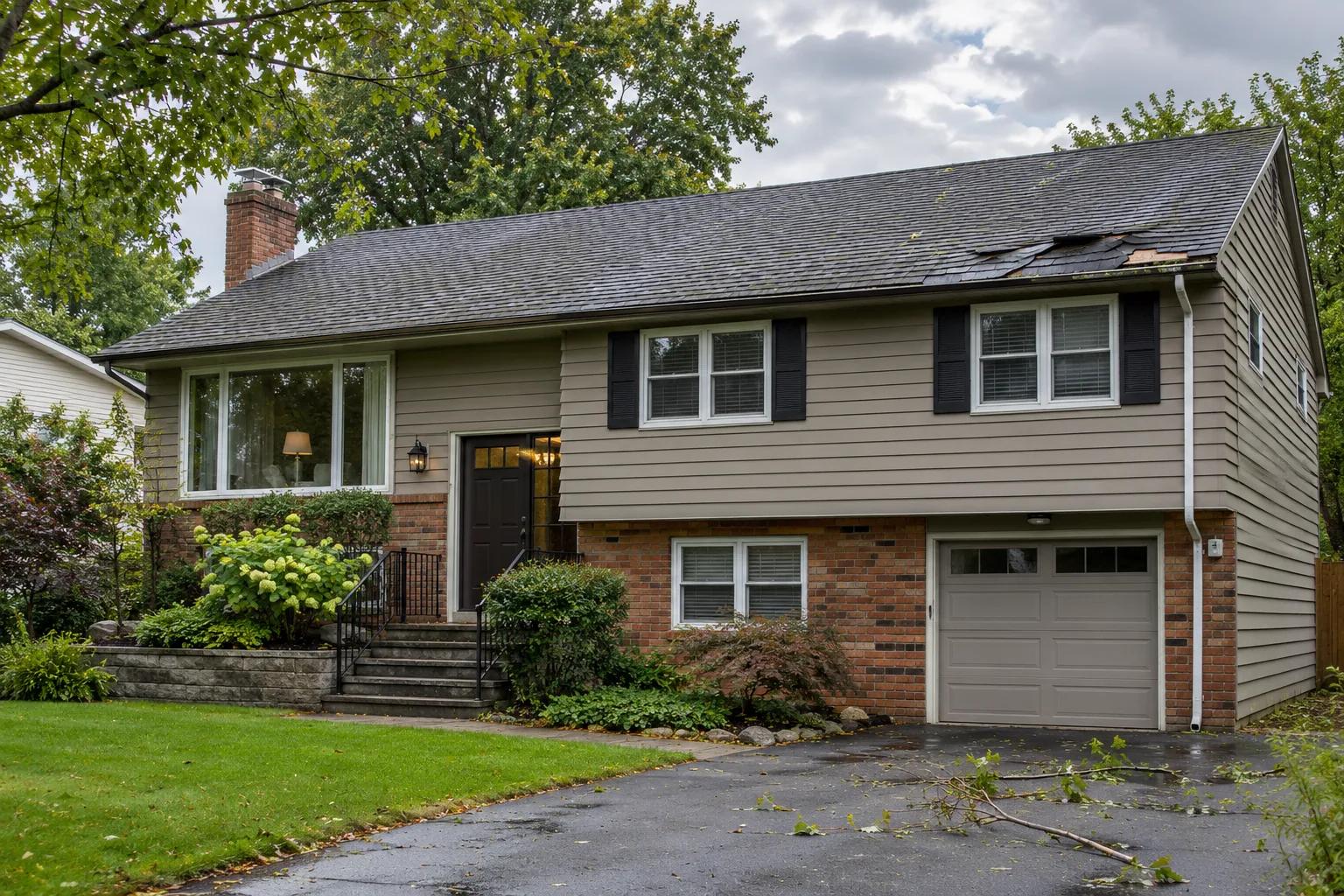
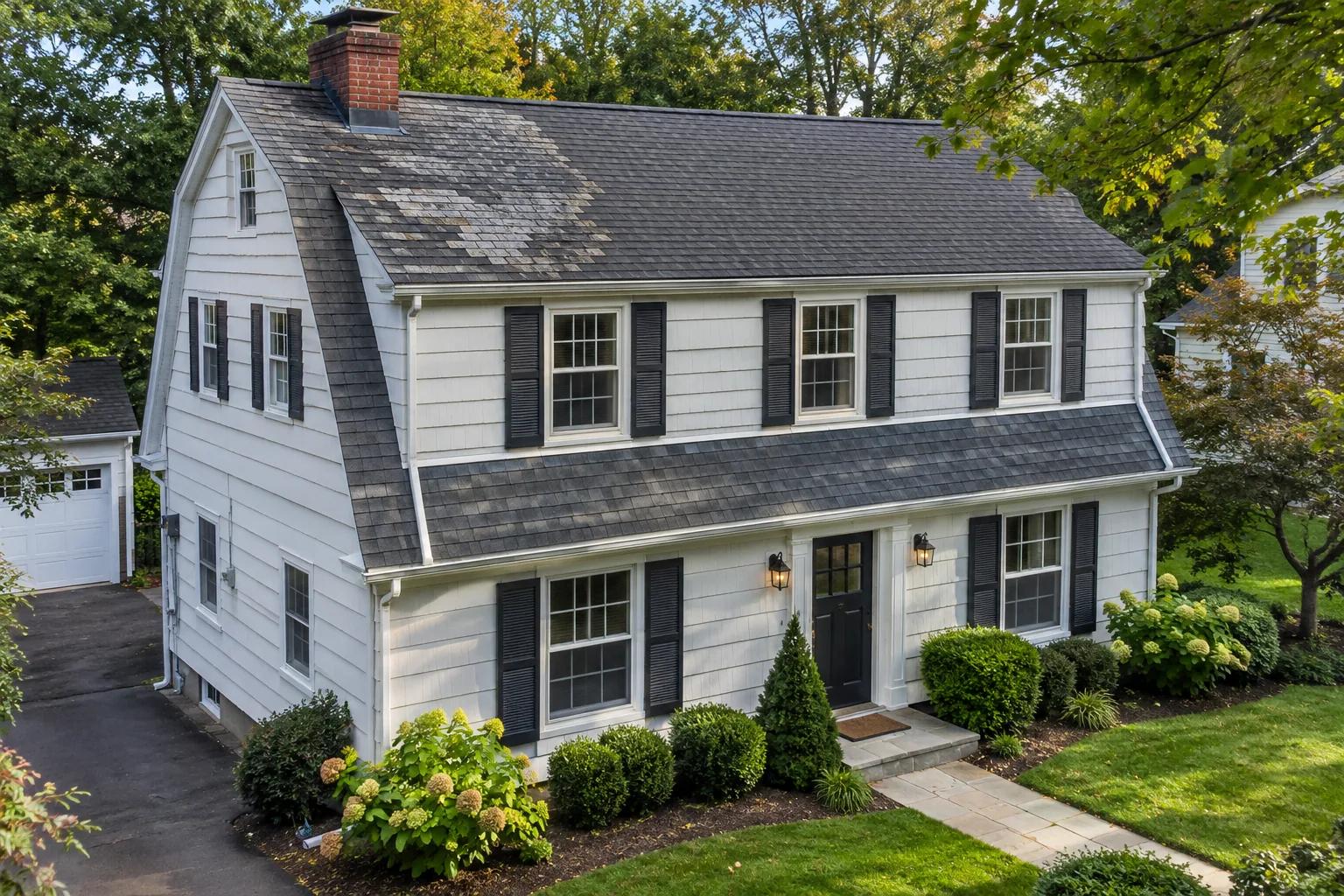
From a safe ground position, look for missing shingles, displaced trim, debris in gutters, or obvious damage around a chimney. Binoculars or a phone zoom may help. Do not walk beneath loose branches or leaning masonry to improve the view.
Interior moisture can also come from plumbing or condensation. A dark patch directly below a roof does not establish a roofing defect by itself. The Owens Corning guide to potential roof-leak signs is useful background on visible indicators, including damaged shingles and flashing.
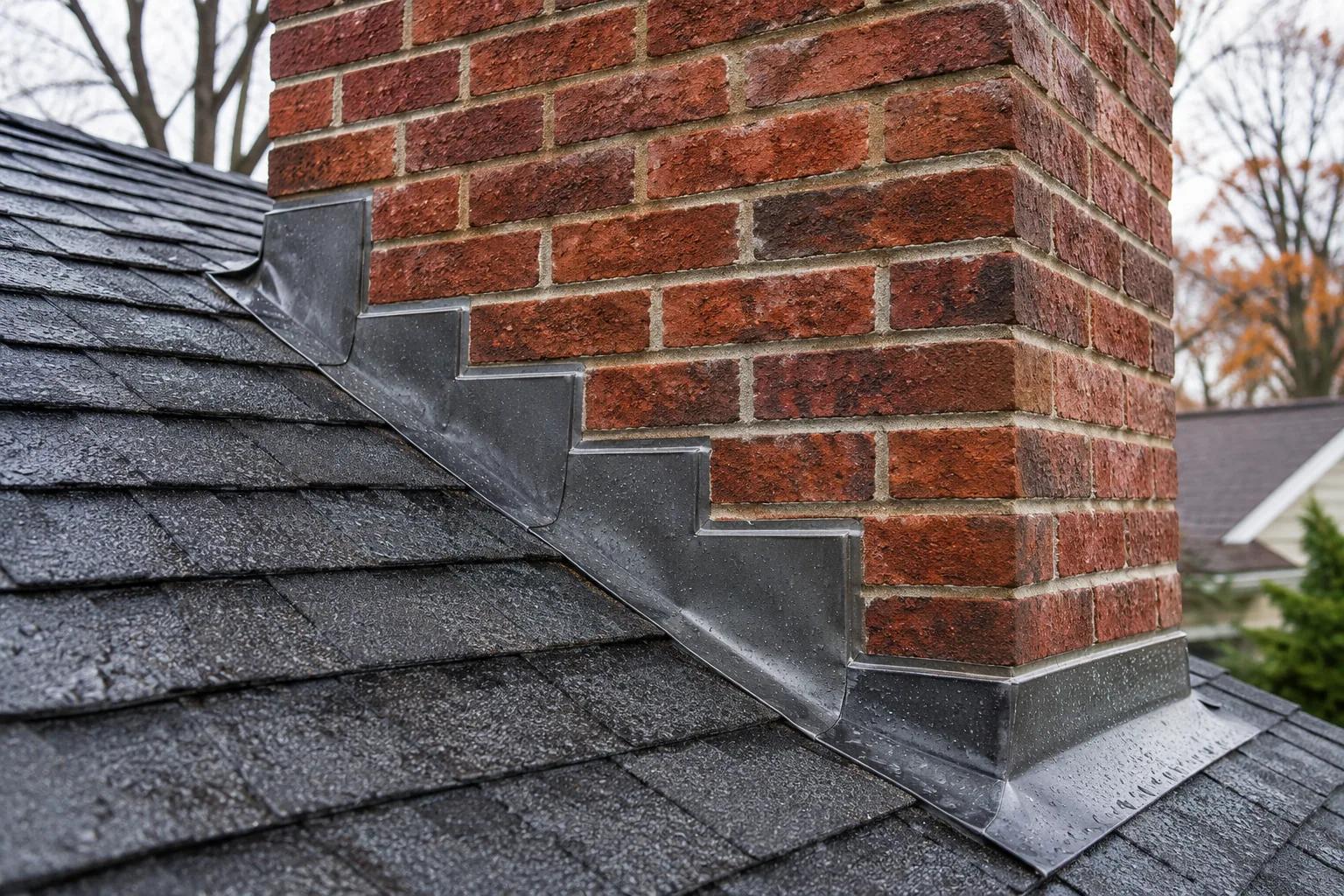
If staining is near a chimney, see our guide to chimney flashing leaks. Keep this as a possible source to investigate rather than a diagnosis.
Ask for a cause-based inspection
Tell the contractor which rooms are affected and share the weather record. Ask how the proposed entry point connects to the interior damage, whether adjacent flashing or roof penetrations were checked, and what evidence supports the repair recommendation.
A useful proposal distinguishes the exterior repair from any interior drying or restoration. It also explains what remains uncertain until materials are opened. Photographing a damaged shingle is helpful; explaining why that shingle accounts for the leak is more useful.
Questions homeowners ask
Can a roof leak appear somewhere other than the entry point?
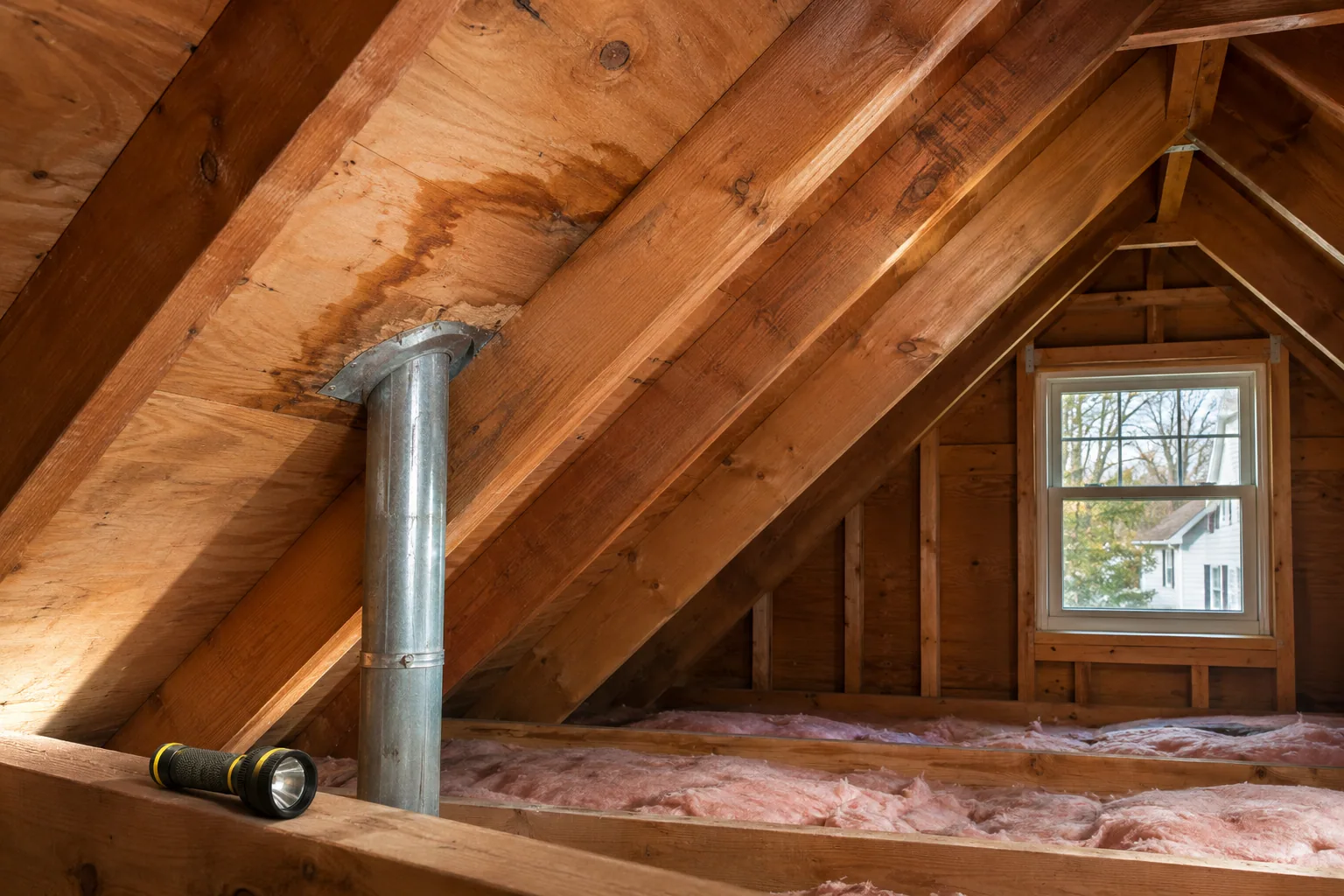
Yes. Water may travel along roofing layers, decking, or framing before becoming visible. The ceiling location helps guide an inspection but cannot locate the source on its own.
Does one leak mean I need a new roof?
No. A localized defect may suit a targeted repair. Wider deterioration, repeated failures, and the surrounding system's condition change the decision. Our repair-versus-replacement guide explains those questions.
Should I wait for another storm to collect evidence?
Do not delay a repair request when water is entering. Share the observations already available. After a recent storm, use the storm inspection checklist without exposing yourself to hazards.
Turn your observations into a repair request
Royal One Construction provides roof repair in New Jersey. Share the affected room, the weather pattern, and your photos through the estimate form. The goal is a professional evaluation of the cause and a clear next step for your property.