Chimney
Is Your Chimney Flashing Causing That Roof Leak?
Understand the roof-to-chimney junction, distinguish flashing symptoms from masonry issues, and ask for a repair scope that addresses the cause.
In this guide
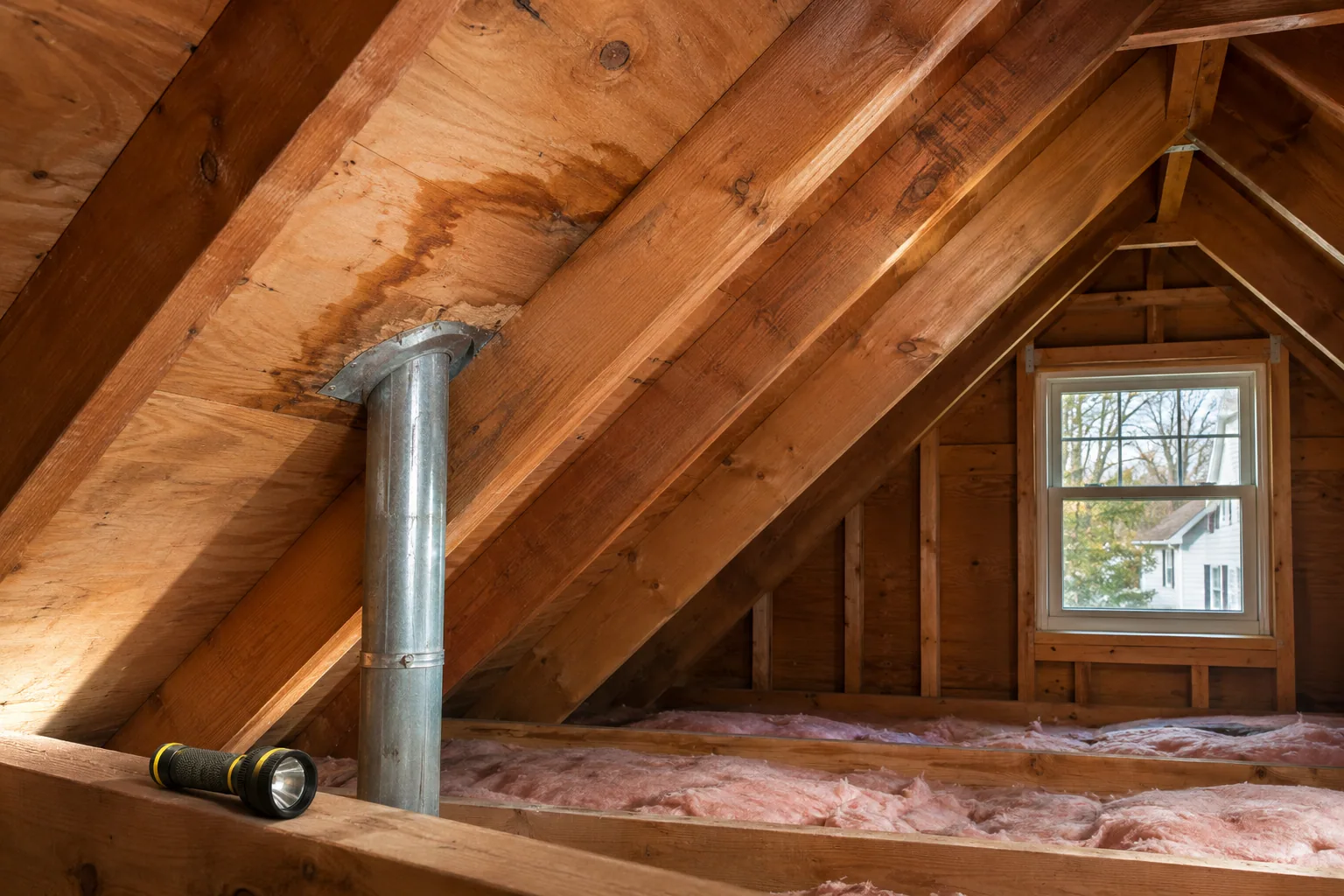
A ceiling stain beside a chimney often points homeowners toward the brickwork. The actual entry point may be the roof-to-chimney connection, a masonry defect, or more than one condition.
Chimney flashing manages water where two different building elements meet. A useful inspection considers that connection as a system and explains how the observed defect relates to the leak.
Know which junction needs inspection
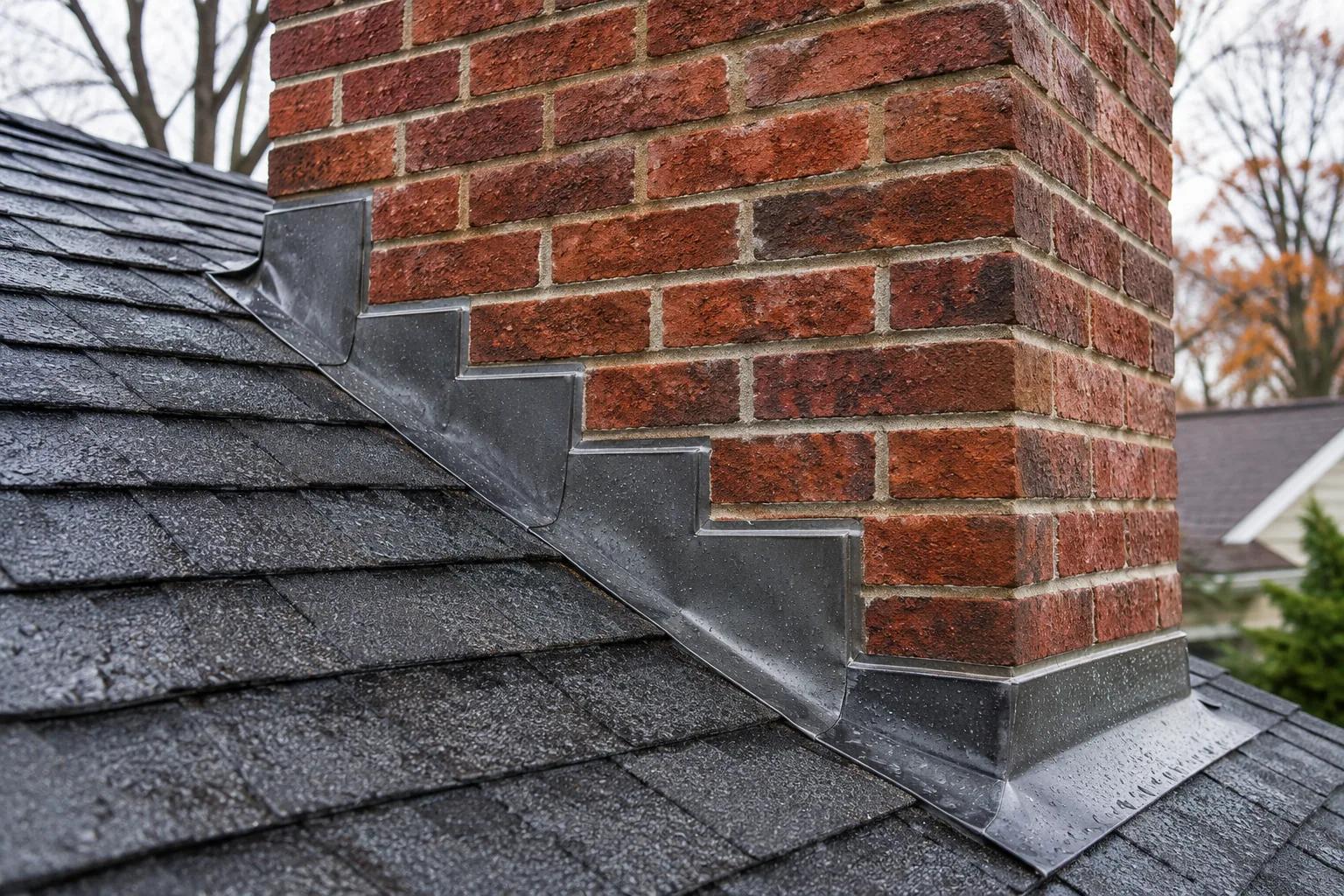
Where shingles meet a chimney, metal flashing details help direct water back onto the roof surface. Step flashing and counterflashing are commonly involved, with the appropriate arrangement depending on the roof and chimney.
GAF's explanation of roof flashing describes why roof intersections and penetrations need deliberate water-management details.
Homeowners do not need to identify every metal piece themselves. The practical request is for a contractor to explain how water is meant to pass around the chimney and where that path has failed.
Record the leak pattern
Note which side of the chimney is affected indoors, whether water appears during wind-driven rain, and whether the problem returns in the same weather. Photograph staining with enough context to show the room and chimney position.
From a safe ground location, look for visibly displaced metal, broad patches of sealant, missing shingles, or damaged masonry. Do not climb onto the roof or approach unstable brickwork.
Water can travel before appearing inside, so location alone is not a diagnosis. Our roof-leak documentation guide explains how to make a useful inspection record.
Distinguish flashing from masonry
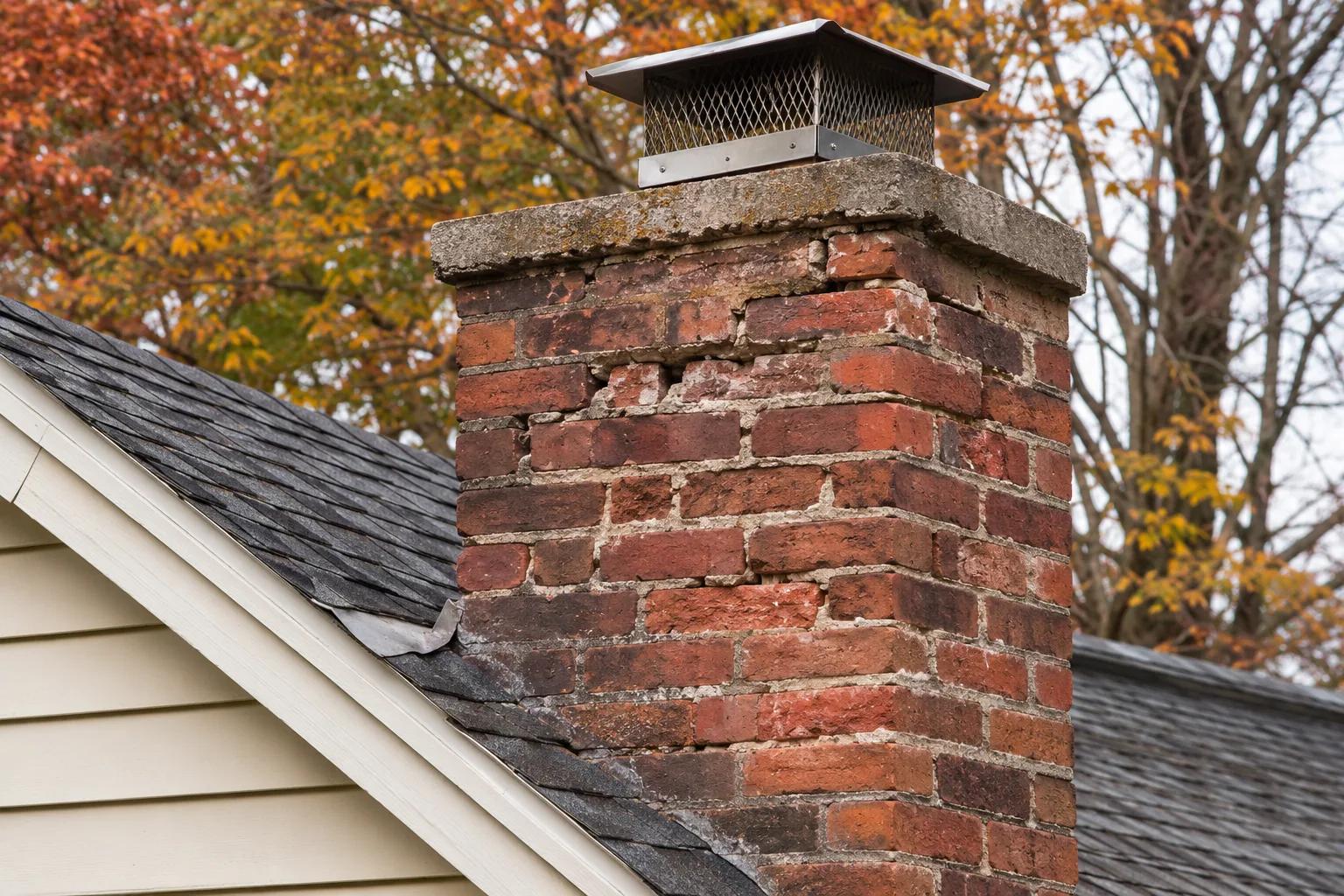
An inspection should consider the flashing, adjacent roofing, chimney crown, brick and mortar condition, and other relevant moisture paths. Repairing only the roof junction may not address a deteriorated crown or damaged masonry above it.
Likewise, repointing mortar joints does not automatically correct a defective flashing assembly. Ask the contractor to distinguish each finding and identify whether the proposed work addresses one issue or several.
If the proposal includes masonry work, our repointing-versus-rebuilding guide explains the difference between joint repair and a broader reconstruction scope.
Ask what the proposed repair changes
A useful flashing proposal identifies the affected side or junction, access requirements, materials to be removed, and how new work will integrate with the roof and chimney.
Ask which metal will be replaced or retained and why. If a sealant repair is proposed, ask whether it is temporary protection, a limited maintenance repair, or part of a properly detailed assembly. A product applied over a joint is not, by itself, an explanation of the underlying water path.
Request photographs of the findings and the completed accessible details. Clarify whether damaged decking, interior restoration, or additional masonry repairs are included or require separate approval.
Questions homeowners ask
Does a leak beside the chimney always mean bad flashing?
No. Flashing is one possible source. Masonry, the crown, surrounding roofing, and other conditions may contribute. A professional inspection should connect the evidence to the recommendation.
Can the chimney look sound from the ground and still leak?
Yes. Small junction defects and hidden conditions may not be visible from below. Ground photographs help organize an inspection but cannot replace safe close access by a professional.
Should I wait until the next heavy rain?
Request an evaluation when water entry is noticed. Further weather may add damage without making the source easier for a homeowner to identify.
Coordinate the roof and chimney scope
Royal One provides chimney repair and roof repair in New Jersey. Share the leak location and weather history through the estimate form. For recurring cold-weather symptoms, also review the winter maintenance checklist.